Best Trailers for Junk Removal and Demolition Debris.

Junk and demo debris are really two loads hiding in one pile: light, bulky junk that fills the box before it strains the axles, and dense demo rubble that hits the weight limit while the box still looks empty. A dump trailer handles both, which is why the whole business runs on one, high sides for the junk, standard walls for the rubble. Concrete runs a ton per half yard and torn-off shingles weigh about 250 pounds a bundle wet, so the scale at the transfer station will correct any guess you make.
What junk and demo actually weigh
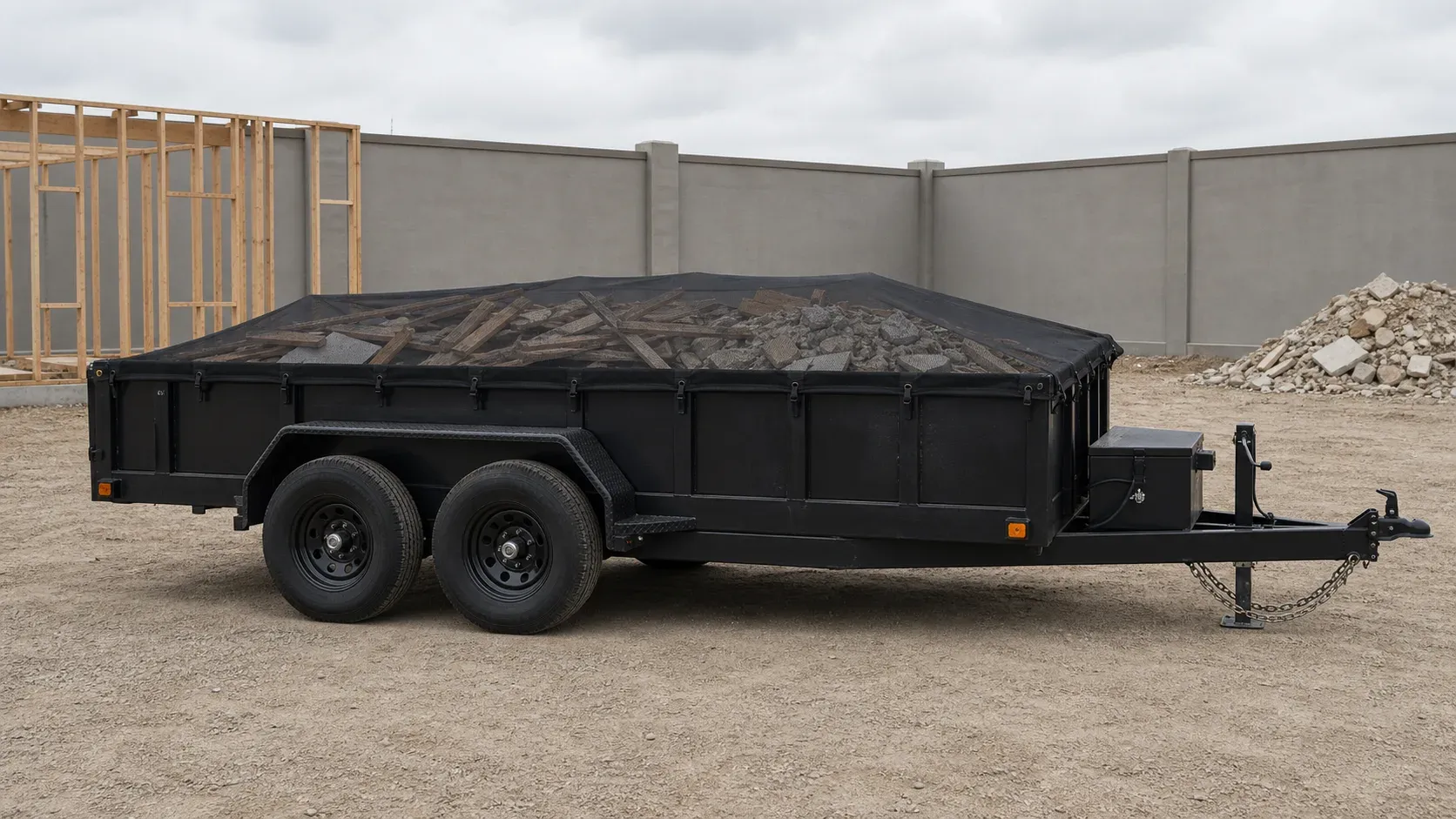
The tricky part is that a single job usually produces both kinds of load. A cleanout's furniture, boxes, and bagged junk run light and bulky, 200 to 400 pounds a cubic yard, so they fill any box long before they trouble an axle. Demo debris does the opposite, and the table below is the whole lesson.
| Debris | Weight | The Reality |
|---|---|---|
| Household junk, mixed | 200 to 400 lb/yd | Cubes out, volume cargo |
| Furniture and appliances | 50 to 300 lb each | Bulky, strap and stack |
| Shingles, tear-off | 250 to 350 lb/bundle-equivalent | 20 squares is 5,000-plus lb |
| Drywall demo | 500 to 800 lb/yd | Heavier wet, always wet |
| Wood framing demo | 300 to 500 lb/yd | Nails included, tires disagree |
| Concrete and masonry | 2,000 lb per half yard | Weighs out at a quarter box |
The dense rows are governed by the payload subtraction: a 14K dump's 9,500 usable pounds is only about three squares of tear-off, or a surprisingly small pile of broken concrete. The same density discipline from the gravel and dirt page applies here directly. The junk rows are the opposite problem, all volume, which is what the high-side walls are for. The daily skill is simply knowing which kind of load is on the trailer right now.
Best trailers for junk and demo, ranked
The standard is the dump trailer, full stop. This is its home game: you load over the sides all day and unload in thirty seconds at the transfer station, where hand-throwing costs you an hour of tipping-floor fees and labor both. The junk-removal business page works out the fleet math, but the short version is the 7x14 14K class as the industry standard, high-side builds for volume routes, standard walls where demo rubble dominates, and a ramp gate to walk appliances aboard.
A few alternates cover the edges. The tandem utility is an honest start for the side-hustle tier at hand-unload prices, the equipment deck joins once a skid steer starts loading the demo, and the gooseneck dump is where an operation that outgrew 14K goes next.
The transfer station craft
Load by the split. Put the dense demo in first and forward, low and near the tongue-weight target, then stack and compress the light junk above and behind it. Strap appliances upright where doors and compressors demand it, and build a mixed load so the dump sheds it cleanly instead of avalanching the couch onto the concrete. Tarp everything. Every state treats junk as a spillable load, per the rules, and the mattress loose on the interstate is this industry's signature citation.
The disposal site sets the rhythm. Scale in, tip on level ground with the overhead clearance the dump guide covers, watch for transfer buildings and wires when the box is up, then scale out. That ticket's tonnage is both your disposal bill and a free education in what these loads really weigh, worth remembering the next time you quote a job.
Safety carries the demo leg. Gloves and eye protection are the uniform, since nails and glass ride every load. Walk the tires and pick out debris after demo sites, and take the hydraulic system's maintenance seriously, because this cargo works the box, the gate, and the cylinder harder than any material on the site.
Junk and demo FAQ
What trailer is best for junk removal?
The dump trailer. The 7x14 14K class is the industry standard, high sides handle the volume loads, and the thirty-second unload pays for itself at every transfer station.
How much does demo debris weigh?
A lot. Shingles run 5,000-plus pounds per 20 squares, drywall 500 to 800 a yard, concrete a ton per half yard. The dense loads weigh out at a quarter box, and the scale settles the rest.
Can I start with a utility trailer?
Yes, at the side-hustle tier, hand-unloaded, per the business page's ladder. The dump earns its place fast, usually right after the first shingle job.
Do I have to tarp junk loads?
Effectively everywhere, since junk is the definitional spillable load. Keep a tarp sized to the box on the trailer, per the rules.
Why does concrete fill so little of the box?
At a ton per half yard, you hit the payload limit at about a quarter box while the walls still look empty. Density beats volume, and this is the bluntest example of it.
What truck does the work need?
A three-quarter-ton behind the 14K standard, per the class pages, moving up to a one-ton when the gooseneck arrives.