Aluminum-Frame Enclosed Trailers Explained.

An aluminum-frame enclosed trailer costs 30 to 50 percent more than steel, and in return it weighs 15 to 25 percent less and never rusts. That trade pays off if you run high miles, park in salt-state winters, or plan to keep the trailer past a decade. It doesn't pay off for occasional use in a dry climate. With aluminum, the quality question moves from coatings to welds and fatigue engineering, so inspect it there.
What an all-aluminum trailer is
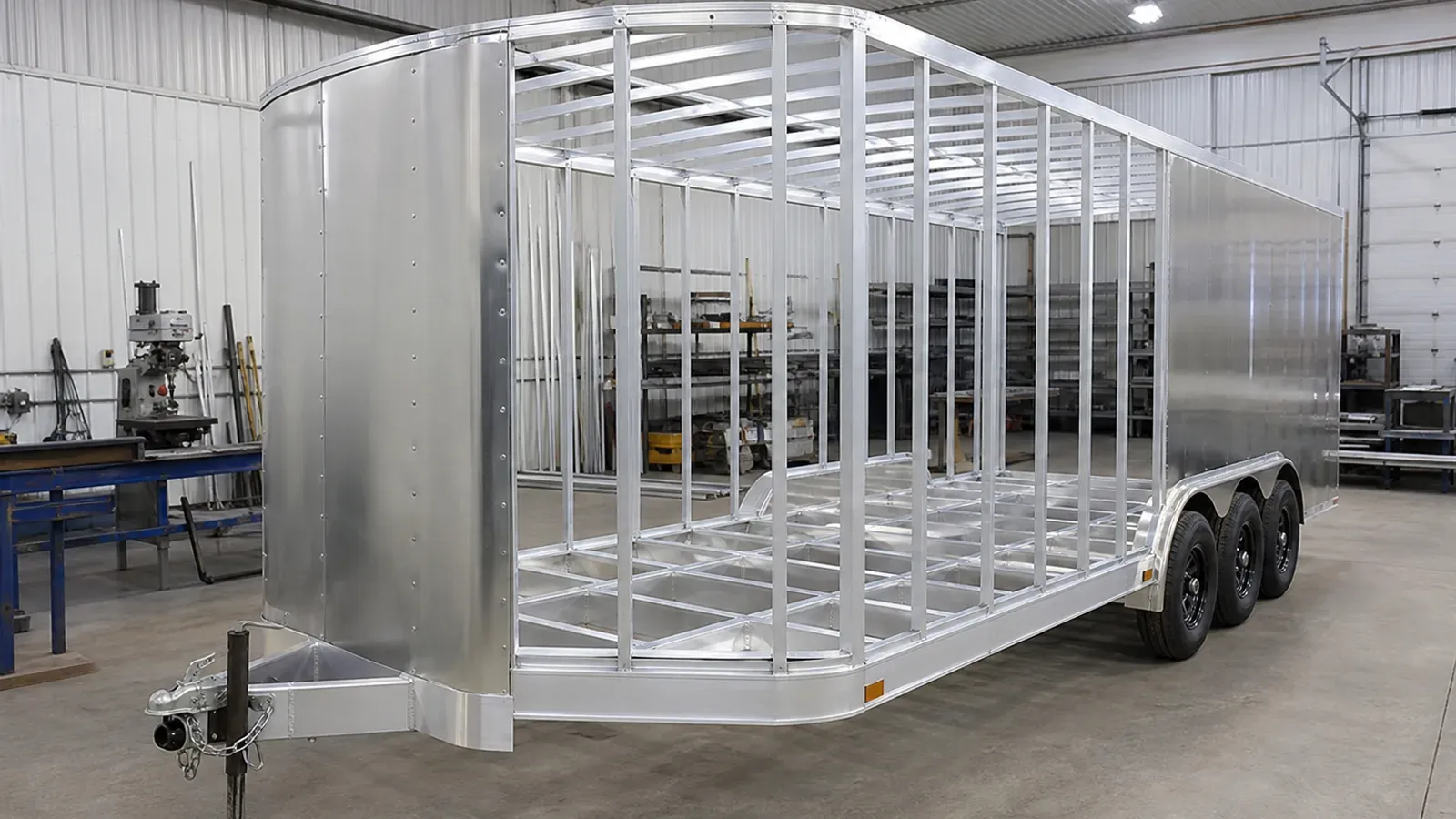
All-aluminum means the skeleton, not just the skin. Nearly every enclosed trailer wears aluminum sheet on the outside, so the frame underneath is what you're really deciding. An aluminum-framed build uses extruded aluminum tube and interlocking sections where the steel version uses welded steel. You'll read the difference on the spec sheet and the price, never on the exterior.
Two things justify the premium. The first is weight. An aluminum frame runs 15 to 25 percent lighter than the steel equivalent, 300 to 700 pounds on common classes, and that savings turns straight into payload and fuel economy for every mile you tow. The classic example is an enclosed car hauler that gains 500 pounds of legal car. Run the fuel numbers over high annual miles and the case makes itself.
The second is corrosion, and in half the country it matters most. Aluminum oxidizes into a thin surface layer that seals itself and stops. There's no coating to maintain, no joints to inspect with a flashlight, no salt-season aging. Trailers that winter on brined northern and coastal roads keep their structure while steel neighbors dissolve underneath. The resale market notices, and aluminum builds hold their value like the durable goods they are.
Now the caveats. The premium is real money, 30 to 50 percent on the same box. Repairs are a specialty, since aluminum welding needs the right shop and rod, not the welder at the crossroads. And aluminum behaves differently under stress. It fatigues where steel would simply bend, which moves the quality question from coatings to design, gussets, and weld execution. A well-built aluminum trailer outlives its owner. A badly built one cracks at the joints young. Brand tier matters more here than in any other material.
Extrusions, welds, and fatigue thinking
Aluminum builds lean on extrusion, the material's real strength. Instead of welding plain tube at every junction, good builders extrude custom sections, interlocking wall posts, integrated skin channels, one-piece top rails. These assemble with screws into joints steel can't match, and they spread stress the way aluminum prefers. More extrusion and less welding usually makes the better aluminum trailer, which is the opposite of the steel intuition. That's why the top brands' catalogs read like extrusion libraries.
Where a build does use welds, execution is everything. Aluminum welding is less forgiving than steel, and porosity or undercut can hide inside a pretty bead. Look closely at the high-stress points, the tongue junction, spring hangers, and rear door frame, on any trailer you're comparing. Gussets at those points tell you the designer thought about fatigue. Aluminum handles steady loads beautifully and concentrated flexing poorly, so good designers spread every load path.
The corrosion story has one footnote worth knowing, galvanic action. Aluminum touching steel with water present becomes a slow battery that eats the aluminum, and every aluminum trailer carries steel somewhere, in the axles, coupler, and fasteners. Good builds isolate those contacts with barriers and coated hardware. Inspect wherever steel bolts meet the aluminum frame, and treat a white powder bloom at those joints as the warning sign. Good builds manage the problem. Cheap ones build it in.
Maintenance is nothing like steel's routine. There's no coating war and no underside to recoat, just an occasional wash, especially after salt, a look at the galvanic points, and the same axle, brake, and bearing calendar every trailer needs regardless of frame. The running gear under an aluminum trailer is still steel, and it rusts on the usual schedule. Plenty of owners have babied a pristine aluminum frame while the axles underneath aged like a shipwreck.
Aluminum sizes and the payload dividend
| Class | Typical GVWR | Aluminum Empty Weight | Typical Payload |
|---|---|---|---|
| 6x10 single axle | 2,990 lb | 1,000 to 1,200 lb | 1,800 to 2,000 lb |
| 6x12 tandem | 7,000 lb | 1,450 to 1,750 lb | 5,250 to 5,550 lb |
| 7x16 tandem | 7,000 lb | 1,900 to 2,300 lb | 4,700 to 5,100 lb |
| 8.5x20 tandem | 9,900 lb | 2,500 to 3,000 lb | 6,900 to 7,400 lb |
Set this table against the steel guide's numbers and the payoff shows up plainly, 300 to 600 pounds more payload at every class, the tangible half of the premium. The 7,000-pound class rewards it most, because enclosed boxes crowd their ratings fastest there and every pound saved on the frame is a pound you can carry.
Tow numbers improve at the margins. A lighter box tows easier and burns less, though the class rules still hold, half-tons through the loaded 7-wides and a three-quarter-ton at 8.5-wide. The wind profile doesn't change, since aluminum saves weight, not frontal area. The GVWR math works the same way, just with a friendlier empty number.
Where aluminum wins and loses
The buying rule. Weigh your annual miles, your winters, and how long you plan to keep it. If two of those three run high, the premium is honest money. If all three run low, buy the steel box and put the difference into axles and interior. The full comparison works through the numbers.
Aluminum-frame FAQ
Is an aluminum trailer worth the premium?
For high mileage, salt-state winters, or decade-plus ownership, usually yes, since the weight, corrosion, and resale numbers cover it. For occasional use in a dry climate, no, and steel's value wins.
Do aluminum trailers crack?
Badly designed ones can, at the high-stress joints, because aluminum fatigues where steel bends. Good builds gusset and extrude those points, which is why brand tier matters most with this material.
How much lighter is aluminum?
Usually 15 to 25 percent on the frame, or 300 to 700 pounds on common classes, all of it back as payload.
Does aluminum corrode at all?
It seals itself with a surface oxide and stops. The one thing to watch is galvanic corrosion where steel hardware touches the frame, and good builds manage it with isolation.
Can any shop repair aluminum?
No. Aluminum welding needs the right equipment and technique. Find your nearest capable shop, especially if you're rural, because repair access is part of the ownership math.
Is the running gear aluminum too?
No. The axles, springs, and couplers stay steel and rust on the usual schedule. The standard maintenance calendar applies under even the prettiest frame.