Steel vs. Aluminum Enclosed Trailers. Which Frame to Buy.

Steel frames cost less, repair anywhere, and start rusting the day they leave the factory. Aluminum frames cost 30 to 50 percent more, weigh 15 to 25 percent less, and shrug off the corrosion that eventually eats steel. Salt states, high mileage, and long ownership buy aluminum. Dry climates, tight budgets, and occasional use keep steel honest. The climate you park in decides more than any brochure does.
Steel vs. aluminum at a glance
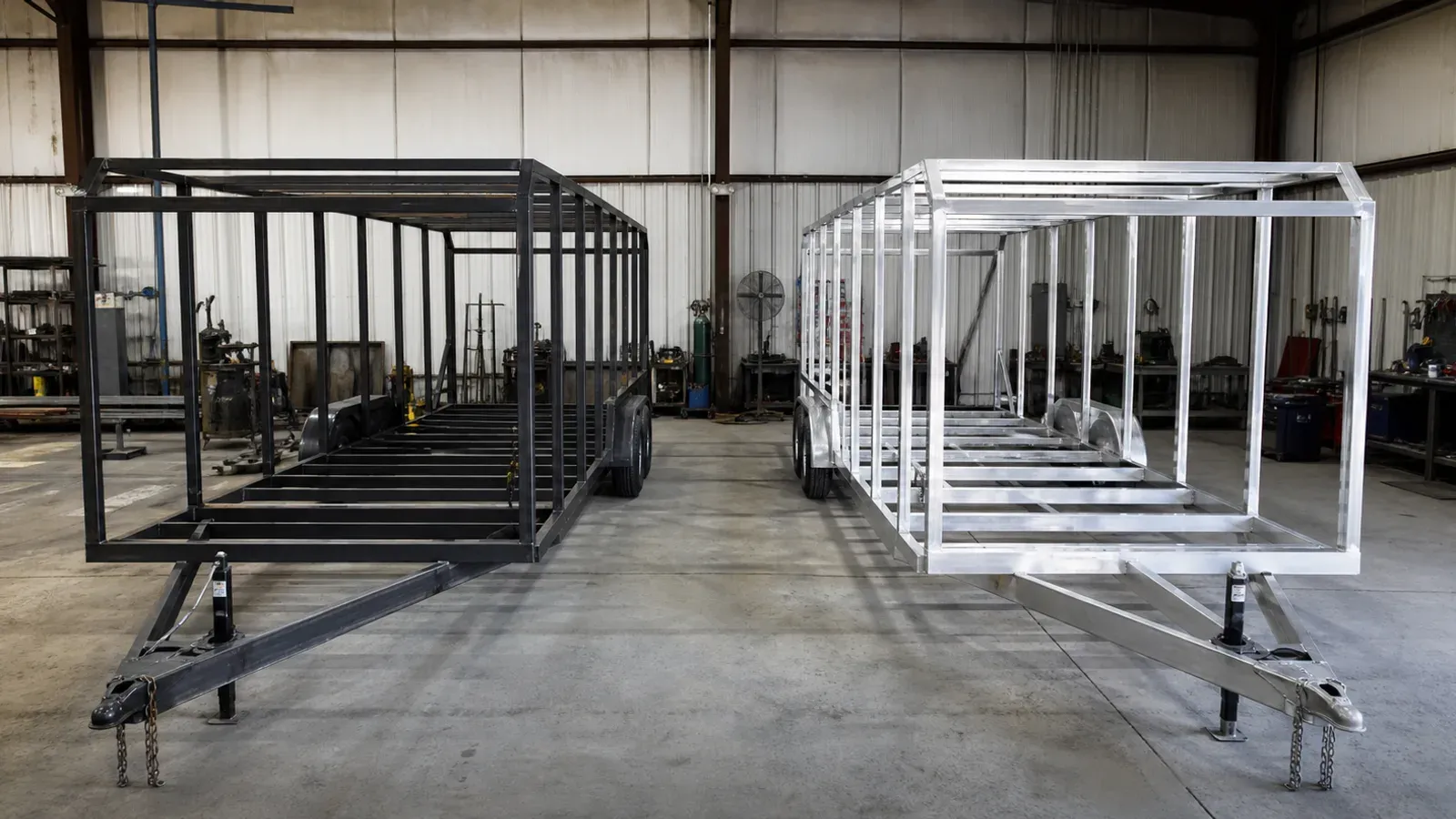
| Steel Frame | Aluminum Frame | |
|---|---|---|
| Purchase price | The baseline | 30 to 50 percent more |
| Empty weight | Heavier | 15 to 25 percent lighter |
| Corrosion | The lifetime enemy | Effectively immune |
| Repair | Any welder, anywhere | TIG rig and skill required |
| Strength per dollar | Wins | Loses |
| Payload per GVWR | Loses the weight back | Wins it back |
| Resale, year ten | Condition-dependent | Holds a premium |
The frame is the enclosed trailer's single biggest fork. Everything else on the order sheet is reversible by comparison. Both materials build excellent trailers and terrible ones, and the steel page and aluminum page go deep on each build. This page just runs the fight.
Strength per dollar, service anywhere
Steel's first argument is the price tag. The same box in steel costs meaningfully less, and if your trailer only works occasionally, that difference funds years of everything else. Strength per dollar runs the same way, since steel's stiffness and impact tolerance come cheap, and a steel frame absorbs the dock rash and pothole abuse of working life without complaint.
The second argument is the repair map. Every town in America has someone who can weld steel, so a cracked crossmember or bent tongue gets fixed same-day at country prices. Aluminum repair wants TIG equipment and a hand that knows the alloy, both rarer and pricier, and a structural aluminum repair sometimes means replacement instead. For trailers that work far from home, steel's fixability is a real spec.
The honest downside is time. Steel oxidizes from day one, and the fight is managed, not won. Factory coatings, owner touch-ups, and undercarriage washes after salt exposure all just slow the calendar. In dry country that calendar runs decades and steel dies of something else first. In road-salt states the frame rots from the fasteners and floor rails outward, and ten-year-old steel boxes up north tell the story in their rocker panels. Buy steel for where you park, not where the dealer parks.
Weight, longevity, and the long game
Aluminum's first argument is the scale. Cutting 15 to 25 percent off the empty weight comes back as payload inside the same GVWR and as fuel on every towing mile, and for high-mileage haulers the fuel savings alone adds up to real money a year. Behind a half-ton tow vehicle, the lighter box is also the difference between comfortable and working hard.
The second is the fight steel can't win. Aluminum doesn't rust, because its own oxide layer is the protection, and a frame that comes through ten salt winters structurally identical to year one explains the whole premium. Fasteners, wiring, and steel running gear still age, nothing's magic, but the bones stay sound. That's why the resale market prices old aluminum boxes with a respect old steel never earns.
The downsides, kept honest. The purchase premium is real and front-loaded. Repairs want specialists. And aluminum's flex means engineering quality matters more: a well-built aluminum frame is superb, while a cheap one cracks at welds steel would have shrugged off. So the material rewards buying up the builder tier, which only compounds the premium. The ATC-tier builders earned their reputations on exactly this kind of engineering.
Which frame you actually need
Buy aluminum if two or more of these apply. You park or drive in a road-salt state. You tow high annual miles where fuel and payload compound. You plan to own past year eight, where the corrosion curves diverge hard. Or you run near a tow vehicle's limits, where the weight savings buys real margin. The premium is front-loaded, and the payback is the whole back half of ownership.
Buy steel if the opposite profile fits. Dry-climate parking, moderate miles, a budget with better uses for the premium, and no problem with basic rust upkeep, meaning touch-ups and washes. A maintained steel trailer in Arizona outlives its owner's interest in it, and the thousands you saved haul a lot of cargo in the meantime.
If you're genuinely split, the tiebreaker is how long you plan to own it. Under five years, steel's math usually wins even in marginal climates, because the corrosion story barely starts. Past ten, aluminum's math usually wins even in decent climates, since the resale gap alone closes most of the premium. The frame is the one decision you can't revisit, so weigh it accordingly.
Steel vs. aluminum FAQ
How much more does an aluminum trailer cost?
Commonly 30 to 50 percent over the same box in steel, depending on builder tier. The premium is front-loaded, and the returns arrive as fuel, payload, and the back half of ownership.
How much lighter is aluminum?
Fifteen to 25 percent off empty weight on comparable builds, several hundred pounds on common sizes, and you get it back as payload and fuel.
Will a steel trailer rust out?
In salt states, eventually. The fight is managed, not won, and ten-year frames show it. In dry climates, steel lasts decades with basic care. Where you park is the whole answer.
Is aluminum strong enough?
Well-engineered, absolutely, and the premium builders prove it daily. The material punishes cheap engineering more than steel does, so buy the builder tier along with the metal.
Which is easier to repair?
Steel, everywhere, by anyone with a welder. Aluminum wants TIG equipment and alloy experience, which is rarer and pricier. If your trailer works far from home, weigh this honestly.
Which holds resale value?
Aluminum, and more so with age, since the corrosion-free bones command a premium old steel can't match. Short ownership windows blunt the advantage.