Trailer Wiring and Connectors Explained.

Trailer wiring runs two standards, the 4-pin flat carrying lights only, and the 7-pin round adding brakes, a 12-volt charge line, and reverse. Braked trailers need the 7-pin, adapters bridge the gap downward but never add circuits, and 90 percent of trailer electrical problems are grounds and corrosion. Keep the pins bright, the grounds clean, and the walk-around honest. Lights are the law's cheapest citation.
Two plugs, seven jobs
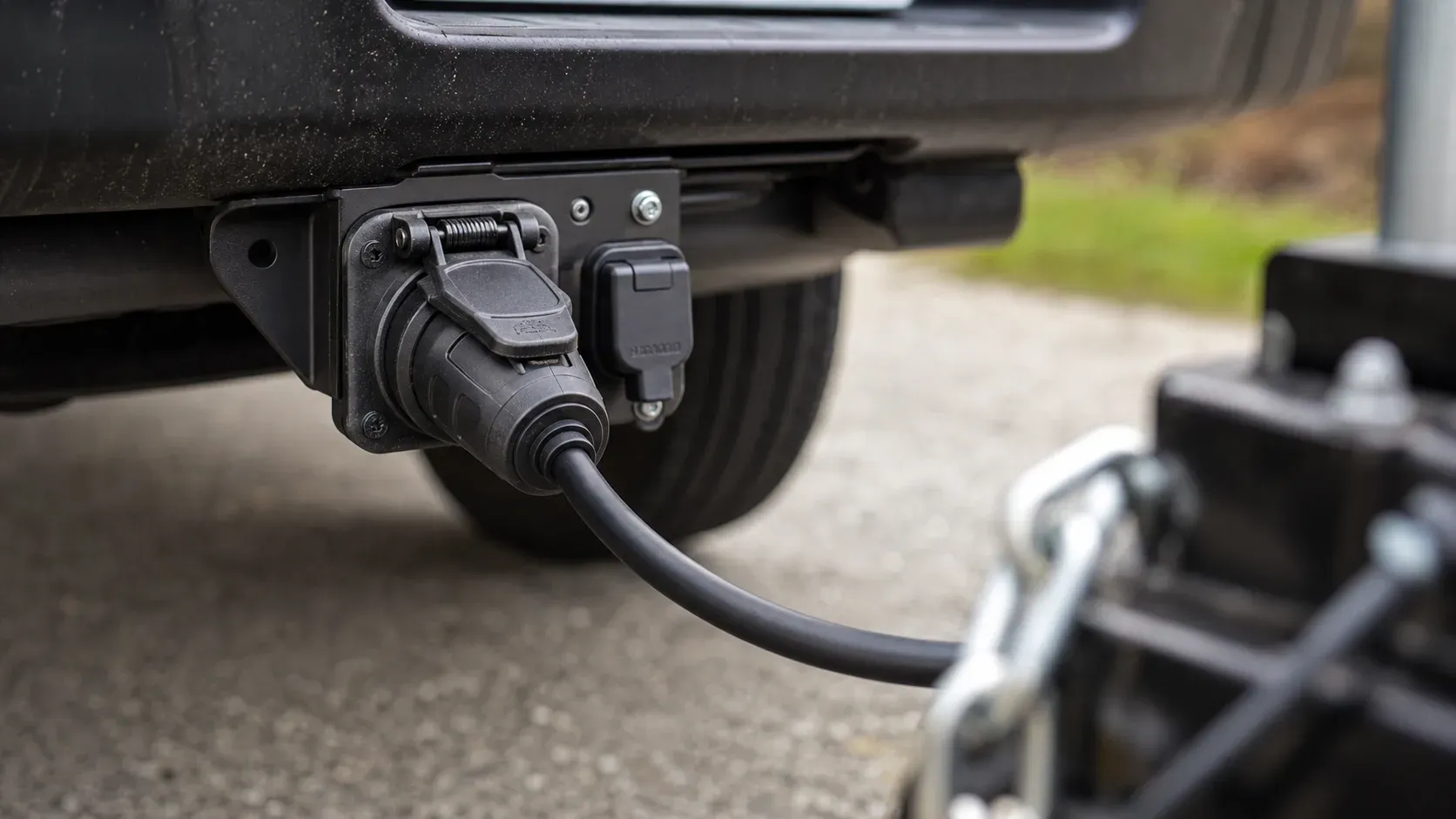
The 4-pin flat is the light-duty standard, four circuits, ground, tail lamps, left turn and brake, and right turn and brake, everything an unbraked utility trailer legally needs and nothing more. The 7-pin round, standard on tow packages and every braked trailer, adds the three circuits working trailers live on, the brake output that carries the controller's command, the 12-volt charge line that feeds breakaway batteries and hydraulic power packs, and reverse, which powers backup lights or releases surge-brake lockouts.
| Circuit | 4-Pin | 7-Pin | What It Runs |
|---|---|---|---|
| Ground | Yes | Yes | Everything's return path |
| Tail lamps | Yes | Yes | Running and marker lights |
| Left turn/brake | Yes | Yes | The left side's signals |
| Right turn/brake | Yes | Yes | The right side's signals |
| Electric brakes | No | Yes | The controller's output |
| 12V charge | No | Yes | Breakaway and pump batteries |
| Reverse | No | Yes | Backup lights, surge lockout |
Adapters run one direction usefully. A 7-pin truck feeds a 4-pin trailer through a plug adapter perfectly. A 4-pin truck adapted up to a 7-pin trailer powers lights only, with the brake and charge circuits arriving empty, the classic mistake behind every "the lights work but the brakes don't" service call.
Grounds, corrosion, and the classics
Trailer electrical trouble is ground trouble until proven otherwise. The white wire's frame connection, and the truck-side socket's own ground, corrode first and misbehave creatively, dim lights, turn signals that swap sides, brakes that fade with the lamps on, all classic ground-path symptoms you diagnose at the connection before anywhere else. Keep grounds bright, tight, and to clean metal, and on quality builds run a dedicated ground wire to each lamp instead of trusting frame paint and hinge points to conduct.
Corrosion runs the same campaign at the pins. The connector lives at bumper height in road spray, so pins go green and pit. Dielectric grease at every season change and covers closed when unplugged slow it, and a wire brush and contact cleaner reverse the early stages. The breakaway battery rides the 7-pin's charge line, tested at hookup, and check the charge line's own fuse at the truck battery when a dump pump or breakaway mysteriously dies.
The walk-around is the law's cheapest compliance, running lamps, left, right, brake, and the four-way flash, checked at every hookup in fifteen seconds against the citation and the merge nobody signals into. Voltage-drop realities close the craft. Long runs on thin wire dim what short runs deliver, and LED conversions on old trailers fix half the dim-lamp complaints by drawing a tenth the current through the same tired circuits.
Wiring FAQ
4-pin or 7-pin, which do I need?
Brakes anywhere on the trailer means 7-pin, period, since the brake and charge circuits live there. Lights-only utility trailers run the 4-pin honestly.
Can I adapt between them?
Down, perfectly, a 7-pin truck to a 4-pin trailer. Up, lights only, because the adapter can't create the brake and charge circuits the 4-pin socket never had.
Why do my trailer lights act possessed?
Usually grounds, the white wire's frame connection or the socket's own ground corroded. Clean both before chasing anything cleverer.
What's the 12-volt pin for?
The charge line, keeping breakaway batteries and hydraulic power packs topped underway, fused at the truck battery, and the first thing to check when either dies.
Why won't my electric brakes work through an adapter?
A 4-to-7 adapter powers lights only. Electric brakes need a truck-side 7-pin socket wired with a brake circuit and a controller behind it.
How do I stop connector corrosion?
Dielectric grease seasonally, covers closed when unplugged, and pins brushed bright at the first green. The connector lives in road spray, so treat it like it.