Skid-Steer Trailers Explained.

A skid-steer trailer is a 14K equipment trailer tuned to the machine: 18 to 20 feet of deck, crossmembers tight enough for concentrated wheel loads, stand-up ramps rated for the climb, and D-rings placed where a skid steer's chains actually run. Most full-size machines with an attachment fit the class with margin. Buy the tuning. It costs little over a generic deck and pays off every load.
What makes a trailer a skid-steer trailer
A skid-steer trailer is the trade name for the equipment trailer configured around the industry's most common machine. Builders sell it as a model line, not just a label, and the choices are specific. Deck length is matched to machine-plus-attachment footprints, crossmember spacing takes four small contact patches carrying 8,000 pounds, the ramps are rated for the loaded climb, and the tie-down points sit at the corners a skid steer's chain geometry wants.
The machine drives every number. A full-size skid steer runs 6,500 to 9,500 pounds with attachments, concentrates that weight on four small tires or two short tracks, climbs ramps at a steeper attack than wheeled tractors, and chains down at four corner points with binders. A generic deck handles all of that adequately. The purpose build handles it well, daily, for a decade, and the price difference is small enough that the trade buys the tuning by default.
The class math lands at 14K. Machine plus attachment plus mud plus margin wants the 14,000-pound tier's 9,400 to 10,400 usable pounds, and the whole configuration standardized there, with tandem 7K axles, brakes all around, and the bumper-pull connection behind a three-quarter-ton. Compact and mini skid steers ride the 10K tier honestly, and large-frame machines with heavy attachments start the gooseneck conversation.
The buyers are the whole trade. Landscaping and hardscape crews, fencing outfits, concrete and demo subs, land-clearing operations, and rental fleets, everyone whose day starts with a skid steer on a trailer. That use-case page covers the hauling craft. This page covers the tool.
Crossmembers, ramps, and corner chains
Crossmember spacing is the foundation of the purpose build. A skid steer's weight rides four contact patches the size of dinner plates, point loads a spread cargo never creates. Sixteen-inch crossmember centers, with some builders running tighter under the load zone, keep the deck boards from deflecting under those loads. Under tracks the math eases slightly, under wheels it doesn't, so spec the spacing for the wheeled machine even if today's fleet runs tracks.
Ramp spec is where skid-steer models earn the name. Look for stand-up ramps, spring-assisted, 5 to 6 feet long, rated per ramp for half the machine's weight with margin, and wide enough for the machine's stance with slop for a tired operator's aim. The attack angle matters. Skid steers climb steeper than tractors but bottom their attachments on bad transitions, and the better builds knuckle the ramp-to-deck crest for it. Deploy the ramps yourself at the dealer, because the spring assist's quality is a twice-daily fact of life.
Tie-down layout finishes the tuning. Four weld-on D-rings rated in working-load tons, placed at the deck corners where a skid steer's four chain runs land at proper angles, not the random rub-rail spacing a general deck offers. The machine chains at its factory points, the binders take up the slack, and DOT's four-points-plus-attachment expectation gets met in five minutes because the hardware was placed for it. Add an attachment tie-down forward, for the bucket or breaker riding loose, and the set is complete.
The rest follows the guide's standard heavy kit: a treated wood deck per the deck debate, full brakes with a controller in the truck, a real drop-leg jack under the nose, and a rub rail for everything else the trailer hauls on the machine's day off.
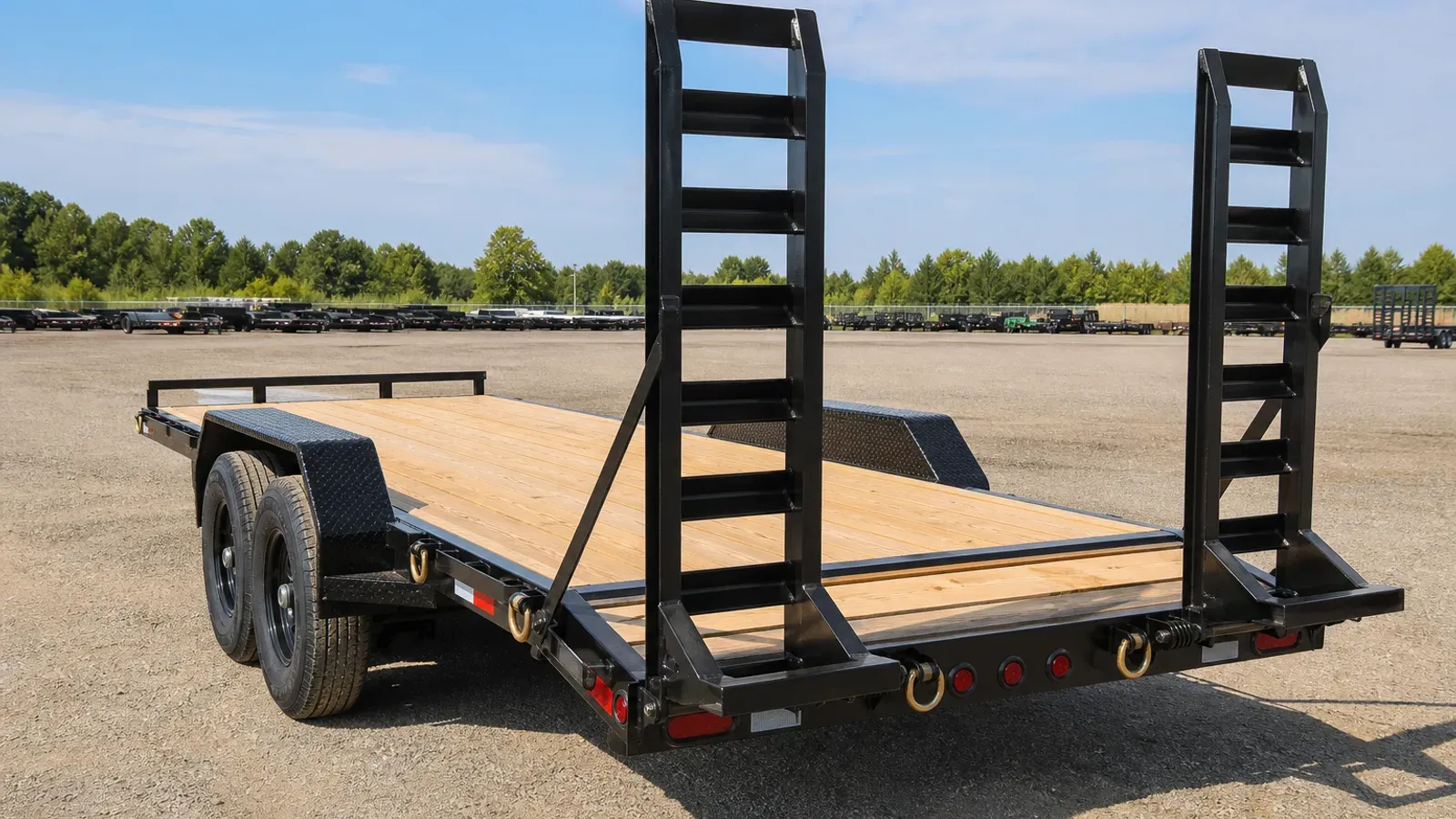
Skid-steer trailer sizes and machine fit
| Class | Typical GVWR | Typical Payload | Machine Fit |
|---|---|---|---|
| 16 ft, 10K | 9,900 to 10,400 lb | 7,000 to 7,700 lb | Compact and mini machines |
| 18 ft, 14K | 14,000 lb | 9,600 to 10,400 lb | Full-size machine plus attachment |
| 20 ft, 14K | 14,000 lb | 9,400 to 10,200 lb | Machine plus attachment plus room |
| 22 ft, 14 to 16K | 14,000 to 16,000 lb | 9,800 to 11,500 lb | Large-frame, dual-attachment days |
Length follows the machine's real footprint. A full-size skid steer runs 10 to 12 feet bucket-down, attachments add feet, and chain angles want working room at both ends, which is how the trade landed on 18 and 20-foot decks as the standards. The 20-footer's extra room costs little and swallows the second attachment, the pallet of block, or the walk-behind that always comes along.
Payload discipline is the whole safety story here. Weigh the machine with the heaviest attachment mounted, because the brochure lies by configuration, and buy margin over that number. A machine at 95 percent of payload every day ages the axles and the odds together. Track machines run heavier than their wheeled twins, another number worth verifying at a scale instead of a showroom.
Where the skid-steer build wins and loses
Here's the rule. If a skid steer is the trailer's main passenger, buy the purpose build in the 18 or 20-foot 14K class and mark the deck for the machine. The generic deck saves you little and costs you every week.
Skid-steer trailer FAQ
What size trailer for a skid steer?
An 18 to 20-foot 14K equipment trailer covers full-size machines with an attachment. Compacts ride the 16-foot 10K tier, and large-frame machines with heavy attachments start the gooseneck math.
How much does a skid steer weigh for trailer math?
Full-size machines run 6,500 to 9,500 pounds with attachments mounted, tracks heavier than wheels. Weigh the real configuration, because brochures quote the stripped machine.
What truck tows a skid steer and trailer?
Loaded 14K work is three-quarter-ton territory at minimum, with payload against tongue weight deciding. The full setup grosses 13,000-plus pounds routinely.
How do I chain down a skid steer?
Four points, with rated chains and binders from the machine's factory tie-downs to the corner D-rings, plus securement for the attachment. Match the working-load limits to the machine per DOT.
Tracks or wheels, does the trailer care?
Tracks spread the load slightly and climb differently, wheels concentrate it. Spec crossmembers for wheels and ramps for tracks and the trailer serves both fleets.
Ramps or a tilt deck for a skid steer?
Standard machines climb rated ramps fine. Low-clearance and daily-cycle operations should weigh the tilt option. For most buyers, ramps win on price and simplicity.