The 24,000-Pound and Up Trailer Classes Explained.

The 24,000-and-up tiers are heavy commercial territory. Tandem 12,000-pound axles through tridems and air-brake tags carry 16,000 to 22,000-plus honest pounds under the hotshot decks, heavy equipment haulers, and pintle tags that move real iron. Duallys and medium-duty trucks pull them, CDLs sit behind the wheel, and the compliance stack is as much a part of ownership as the steel. This is fleet country, honestly mapped.
Where trailers become fleet assets
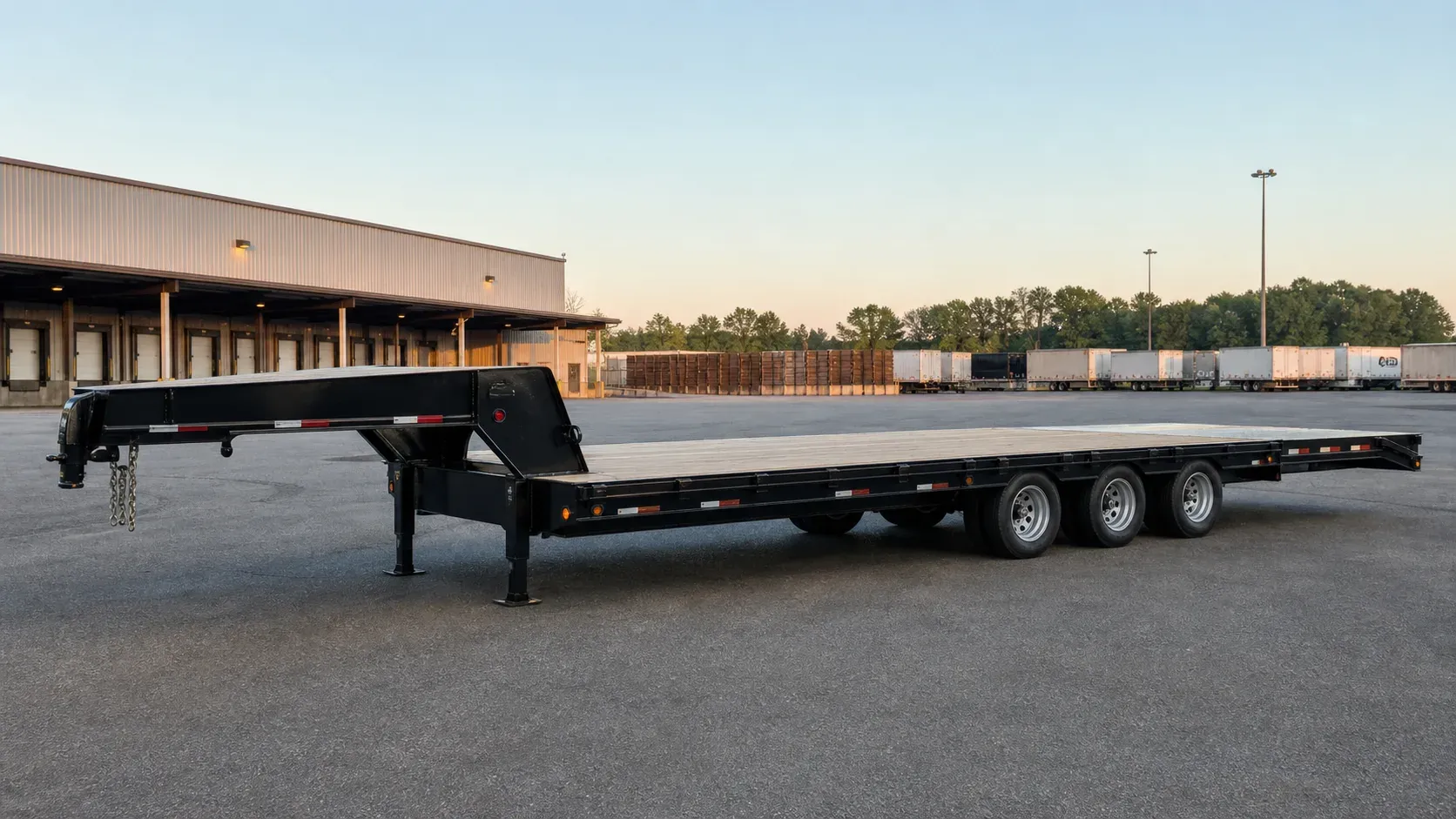
The tiers stack by axle group. Tandem 12,000-pound axles build the 24-to-25,900 class, home to the hotshot deckover and the standard for the heavy equipment gooseneck, with the famous 25,900 badge doing its combined-ratings dance under the 26,001 line. Tridem groups and heavy tandems build 30,000-plus, the hydraulic dovetail's big classes and max-legal freight decks. And the air-brake pintle tags run 30,000 to 50,000-plus behind medium-duty trucks, the tier where this site's pickup math exits entirely.
The payload subtraction lands at 16,000 to 22,000-plus pounds against empty weights of 7,000 to 12,000, capacity for the excavator-and-dozer classes, full freight decks, and the multi-machine days fleets run. The empty-weight spread between builds is revenue at these tiers, and the scale ticket compares builders more honestly than any brochure.
The trucks run from the dually through the gooseneck classes and into medium-duty iron above that. Pin weights of 4,000 to 6,000 pounds write the placard requirement, and glad-hand air compatibility replaces the 7-pin conversation at the air-brake tier.
The tiers at a glance
| Tier | Typical GVWR | Honest Payload | The World |
|---|---|---|---|
| Tandem 12K gooseneck | 23,000 to 25,900 lb | 16,000 to 18,500 lb | Hotshot, heavy equipment |
| Tridem gooseneck | 28,000 to 30,000+ lb | 19,000 to 21,500 lb | Max iron, long freight |
| Air-brake pintle tag | 30,000 to 50,000+ lb | 22,000 to 38,000 lb | Fleet equipment transport |
The compliance stack defines ownership more than any spec does. CDL operation is assumed, since commercial combinations here cross 26,001 pounds by design, and DOT numbers, ELD logs, annual inspections, and the securement chain inventories all follow, sized to the iron by federal rule, per the regulations. The 25,900 badge's non-CDL thread exists but runs thin, per the hotshot page's honest math, and most career operators hold the license and run the full envelope anyway.
Equipment runs commercial spec with no options language. Brakes are electric-over-hydraulic or air by tier, the rubber is 17.5-inch or heavier at load range G-plus per the tire page, the jacks are dual 12K, and maintenance runs on the fleet-overhead calendar that keeps the asset earning. A trailer that sits is the note that doesn't pay.
Heavy class FAQ
What can the 24K-and-up tiers carry?
An honest 16,000 to 22,000-plus pounds by tier, the excavator classes, full freight decks, and dozer-class iron at the air-brake top.
Why is 25,900 GVWR everywhere?
It's the combined-ratings math under the 26,001-pound CDL line, the hotshot world's open secret. Most career operators license up and run the full envelope anyway.
What trucks serve these tiers?
Duallys through the gooseneck classes, medium-duty and up behind the air-brake tags, all sized by pin weight against placards as always, just with bigger numbers.
When do trailers switch to air brakes?
Electric brakes end around the 30,000-pound tier, where air systems with glad hands take over, per the heavy pintle page.
Is there any non-commercial life up here?
Barely, just heavy ag under bounded exemptions and the rare private heavy hauler. The tiers are fleet country, and the compliance stack is the ownership model.