The 10,000-Pound Trailer Class Explained.

The 10,000-pound class is the light-commercial tier. Tandem 5,200-pound axles carry an honest 6,800 to 8,000 pounds, and the famous 9,990 badge exists because 10,001 pounds trips commercial rules in many states. It's the daily-work step up from the 7K tier, the car hauler class today's trucks and SUVs demand, and about the heaviest trailer most half-tons should be pulling loaded.
The light-commercial step
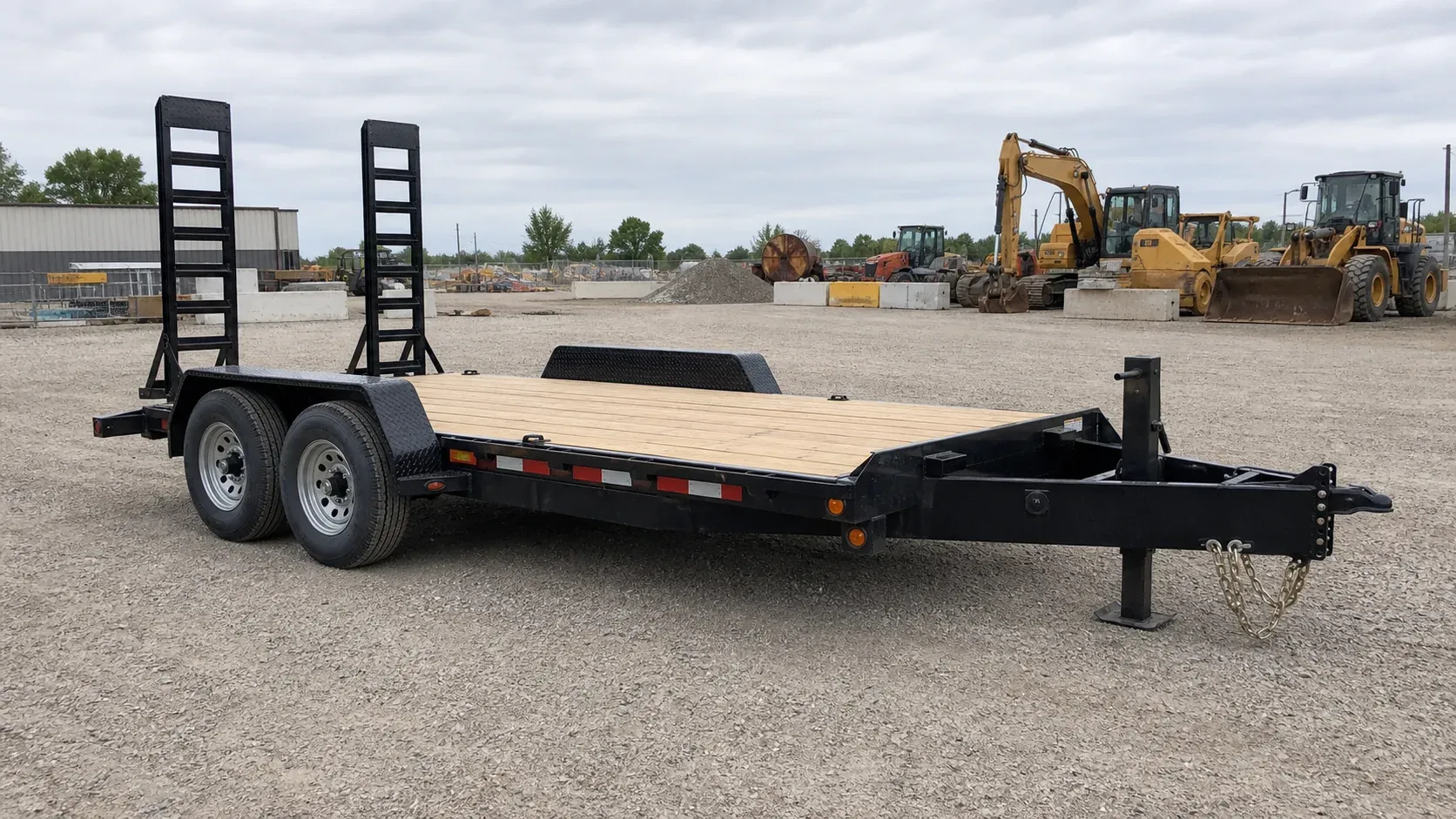
Tandem 5,200-pound axles build the class, and the 9,990-versus-10,400 badge split tells the regulatory story. At 10,001 pounds GVWR you cross commercial registration, inspection, and marking thresholds in many states, so builders badge under the line for the buyers those rules would burden and over it for the fleets already registered commercial. The rules spell out where the line falls. It's the same steel either way, so pick the badge against your own state, not the dealer's habit.
The market at this rating is daily work. You'll find heavy-duty utility crossovers, the 20-foot car hauler today's vehicles require, 10K equipment decks under compact machines, flatbeds hauling material packages, and contractor cargo boxes. This is where hobby specs stop and work specs start. Brakes come standard on both axles, frames step up, and the rubber runs load range D to E.
The payload subtraction lands at 6,800 to 8,000 pounds, and the truck math straddles two classes. Strong half-tons handle the tier loaded light, while the three-quarter-ton conversation starts where loaded reality lives. The tongue arithmetic on both pages shows why.
The class at a glance
| Spec | Typical Range |
|---|---|
| GVWR | 9,990 to 10,400 lb |
| Empty weight | 2,200 to 3,200 lb |
| Honest payload | 6,800 to 8,000 lb |
| Axles | Tandem 5,200-lb |
| Brakes | Both axles, standard |
| Tires | 15 to 16 in, load range D/E |
| Tow vehicle | Strong half-ton to three-quarter-ton |
The load list follows the market. A modern crew-cab pickup on a car hauler, a skid steer with a light attachment, a serious lumber package, or 3 to 4 yards of soil all fit inside a rating the 7K tier can't sign. The step up from 7K costs a little more at purchase and pays it back in margin every loaded day.
10,000-pound class FAQ
Why 9,990 instead of 10,000?
The 10,001-pound line triggers commercial registration and rules in many states, so the badge ducks under it on purpose for private buyers. Fleets that are already commercial just take the 10,400.
What can the class carry?
An honest 6,800 to 8,000 pounds. That covers a modern truck on a hauler, a compact machine, or the material package the 7K tier turns down.
What truck does it need?
Loaded light, strong half-tons serve. Loaded honestly, it's three-quarter-ton math, with 800 to 1,200-pound tongues. The placard decides for your combination.
Is the class overkill above the 7K tier?
For loads that stay under 5,000 pounds, yes. For anything trending past that, the margin is the whole point. Your load trajectory picks between the two neighbors.
When does the class hand off to 14K?
Machines past 7,500 real pounds and daily material work, covered on the 14K page. The tiers overlap less than the numbers suggest.