Pintle Equipment Trailers Explained.

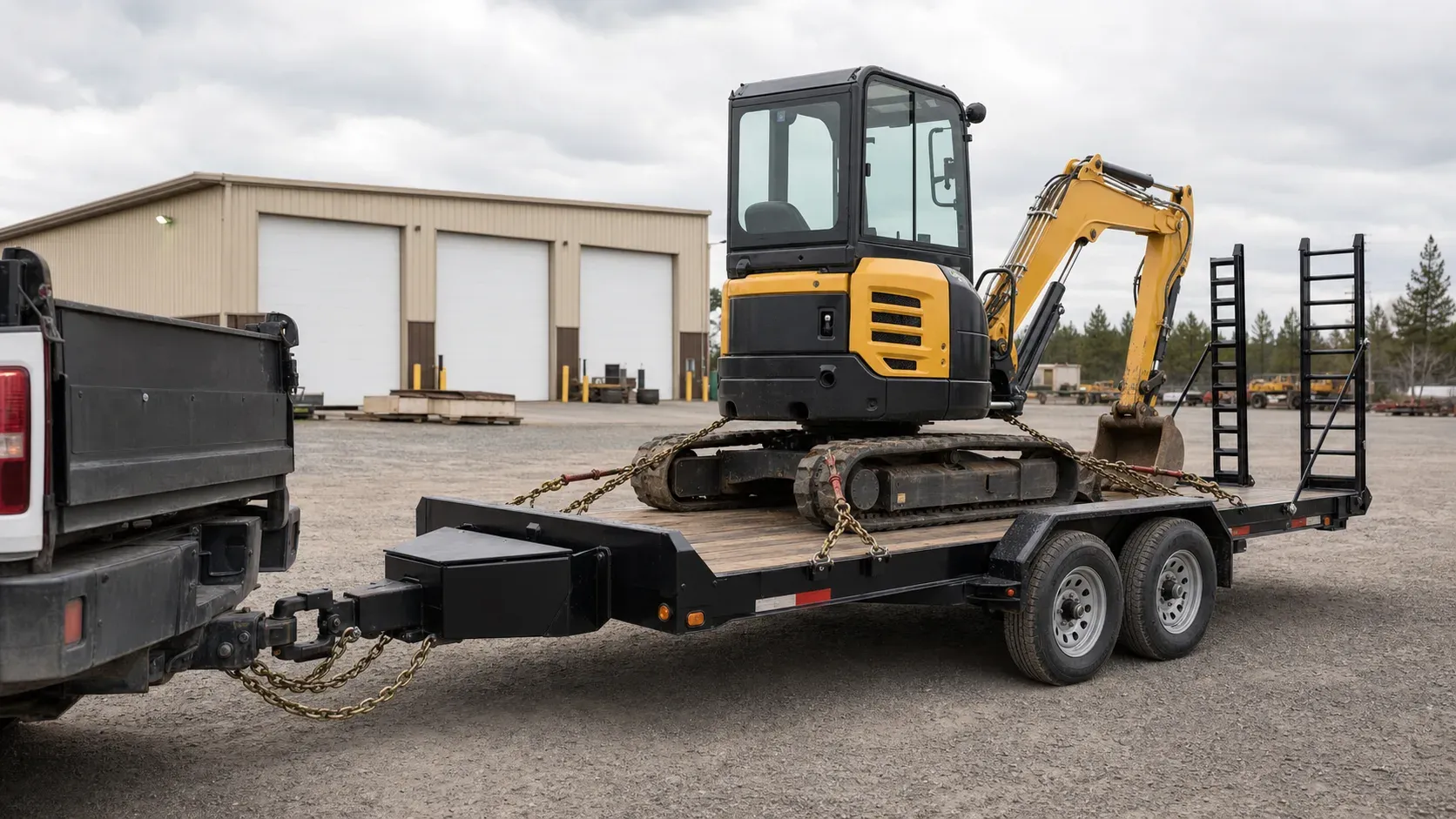
The pintle equipment trailer is the machine mover of the pintle world. You get equipment decks, ramps, and ton-rated securement behind a connection that shrugs off the rough sites where machines actually work. It's the construction fleet's standard iron hauler, and like every equipment trailer, you buy it by your machine list. The reason it's a pintle and not a gooseneck is that rough-ground tolerance.
Machines behind the ring
The pintle equipment build takes the whole discipline of the equipment world, decks sized by your machine list, ramps sized by what has to climb, securement sized by DOT's arithmetic, and puts it behind the severe-duty pintle connection. It's the tag configuration specialized for iron, and it's the construction fleet's answer to the same question the gooseneck equipment world answers for owner-operators.
The split between those two answers comes down to how you run. The gooseneck's pin-over-axle geometry buys capacity per truck, while the pintle's tag geometry buys truck interchangeability and ground tolerance. Operations pick by their own shape. Owner-operators with a dedicated dually run goosenecks, and fleets with mixed trucks and rough sites run pintles. That standardization payoff, which the main guide covers, decides more purchases than any spec line.
As always, the machine list writes the build. Weigh your excavators, dozers, loaders, and compact machines with their attachments, check them against the payload math, and buy a class above your growing fleet. That's the oldest rule in the equipment world.
Equipment spec at ring severity
The deck is the equipment standard, hardened. I-beam mains, crossmembers on 12-to-16-inch centers, and wood decks with steel where tracks grind daily, a call the wood-versus-steel debate lays out. The frame-to-tongue junction is gusseted for the shock loads a pintle's slop delivers and a ball coupler never does. That's the pintle-specific thing the main guide tells you to inspect.
Loading follows the equipment playbook. Stand-up and mega ramps rated for the machines, beavertails to ease tracked climbs, and low range with careful boom work, which the excavator procedures spell out. Secure at four corners with rated chain and binders, add up the working-load limits, and chain attachments separately. It's the towing fundamentals run at a commercial pace.
The running gear matches the class. Full braking, electric through the middle tiers and air above, with the lunette height set under load for each truck. Cross your safety chains and keep the breakaway charged, because even a tough connection isn't exempt from its backups. The CDL and securement rules are the documents working combinations already operate under.
Pintle equipment sizes and payload
| Class | Typical GVWR | Typical Payload | Common Fit |
|---|---|---|---|
| Tandem 7K | 14,000 to 15,000 lb | 9,500 to 10,500 lb | Compact machines, municipal |
| Tandem 10K to 12K | 20,000 to 24,000 lb | 14,000 to 17,500 lb | Excavators, the fleet standard |
| Triple and air-brake | 24,000 to 40,000+ lb | 17,000 to 32,000 lb | Dozers, heavy iron |
The classes mirror the gooseneck equipment tiers at matching weights. The connection is the difference, not the capacity. Truck-side math runs the tag standard, one-tons with rated hitches at the light classes and medium-duty chassis above them, and the receiver plate's rating is the link in the chain you have to audit.
The pintle equipment ledger
The buying rule is the equipment world's, seen through a fleet lens. Your machine list plus margin picks the class, and the shape of your operation, mixed trucks and rough sites versus a dedicated dually, picks the connection.
Pintle equipment FAQ
Pintle or gooseneck for hauling machines?
Fleets with mixed trucks and rough sites run pintle, owner-operators with a dedicated dually run gooseneck. The capacity classes match, so the shape of your operation decides.
What class carries an excavator on a pintle?
The 20-to-24K tandem tiers, same as on the gooseneck side. Weigh the machine plus its attachment against the payload and leave margin.
How do machines chain on a pintle trailer?
The equipment standard. Four corners, rated chain and binders, working-load limits summed per DOT, and attachments chained separately, as federal cargo securement rules lay out.
What's different structurally from a ball-hitch equipment trailer?
The tongue junction, gusseted for the pintle's shock loads, and the lunette's adjustable mount. The deck behind them is standard equipment-trailer stuff.
What truck and license?
One-tons with rated plates up through medium-duty chassis, depending on the class, and these working combinations usually cross into CDL territory, as the rules explain.
Electric or air brakes on the iron hauler?
Electric through the middle classes, air above 25K, where the commercial systems and compliance come with the tier.