Equipment Trailer vs. Flatbed Trailer. Which One to Buy.

An equipment trailer is a flatbed that went to trade school. It carries a heavier frame, tighter crossmembers, rated ramps, and ton-rated tie-downs, all specced for machines that drive aboard. A plain flatbed hauls general freight for less money and skips the machine hardware. If you haul machines regularly, buy the equipment build. If you move pallets, material, and the occasional machine, the flatbed stays honest.
Equipment vs. flatbed at a glance
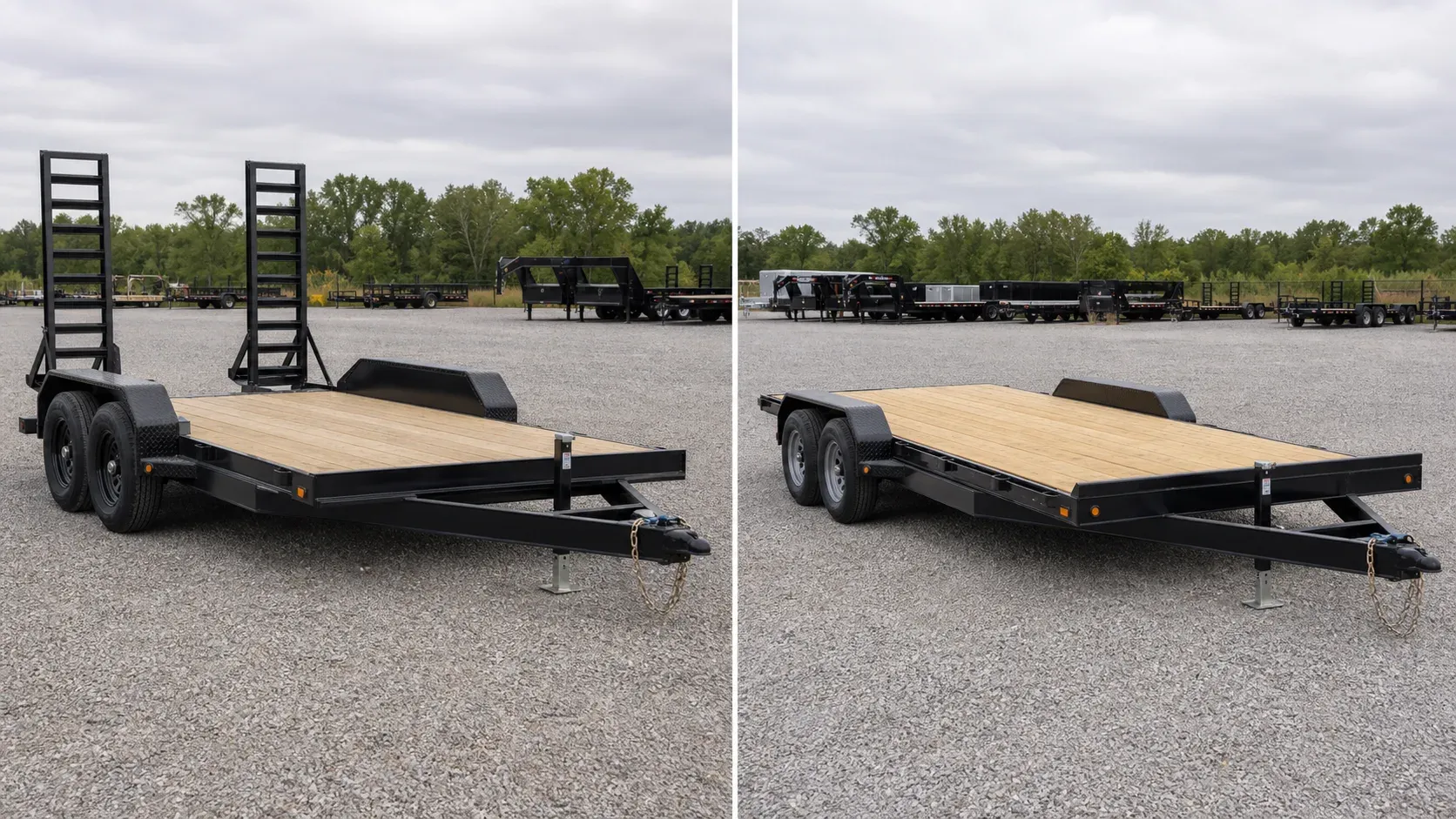
| Equipment Trailer | Flatbed Trailer | |
|---|---|---|
| Built for | Machines that drive on | General freight |
| Ramps | Rated, standard | Optional, often lighter |
| Crossmembers | 12-to-16-inch centers | 16-to-24-inch centers |
| Tie-downs | D-rings rated in tons | Stake pockets and rub rail |
| Frame | I-beam on working classes | Channel common |
| Price | The machine premium | The baseline |
These two categories overlap more than any other pair on this site, and plenty of lots blur the labels. That's exactly why the spec sheet, not the sign, settles what a given trailer actually is.
Built for the point loads
The equipment trailer is built around concentration. A skid steer puts its whole weight through four small tires and a mini excavator through two tracks, so the deck that carries them needs crossmembers at 12-to-16-inch centers, an I-beam frame on the working classes, and D-rings that take rated chain at machine angles. The ramps are the other half of the story, stand-up or mega ramps rated for the machine that climbs them, following the skid steer and excavator procedures.
The premium is real, and the buyer who hauls machines weekly stops noticing it the first time a ramp holds a track loader mid-climb. The trade-off is paying for hardware that general freight never touches.
The generalist's price
The flatbed wins on breadth per dollar. Pallets, lumber, steel, hay, and the occasional light machine all ride the open deck. Stake-pocket-and-rub-rail securement adapts to any shape, and the lighter frame spends less of the GVWR on itself. See the payload subtraction for how that math works. For material-first work with a machine now and then, the flatbed plus a set of honest ramps covers the season.
The trade-off shows up with frequency. Machines loaded weekly work the lighter deck's crossmembers, the unrated ramps, and the pocket tie-downs harder than they were specced for, and the flatbed that hauls a skid steer daily is really just an equipment trailer purchase deferred, usually not for long.
The machine list decides
Count the machine loads. Weekly or more, the equipment trailer's hardware is the purchase, sized by the heaviest machine plus attachment plus margin as its pages describe. Monthly or less, with material carrying the schedule, the flatbed serves for less. And past the fender math, wide machines exit both categories for the deckover equipment world on its own page.
Both categories run shared class math, with the 14K tier as the working standard and the three-quarter-ton behind it.
Equipment vs. flatbed FAQ
What actually makes a trailer an equipment trailer?
The spec sheet does, crossmember spacing at 12-to-16 inches, an I-beam frame in the working classes, rated ramps, and ton-rated tie-downs. The label on the lot means less than those four lines.
Can a flatbed haul a skid steer?
Occasionally, inside its ratings, with rated ramps and honest securement. Weekly, the point loads and ramp cycles argue for the equipment build.
Is the equipment premium worth it for a tractor?
For regular tractor hauling, yes. The tractor page runs the math, and the ramps and deck earn it on every load.
Which has more payload?
The flatbed, at equal GVWR, since its lighter frame spends less on itself. The equipment trailer trades payload for structure the machines need.
What truck do they need?
The same class ladder, half-tons at the light tiers and three-quarter-tons at the 14K standard both categories center on.