Dump Trailer vs. Flatbed Trailer. Which One to Buy.

The dump trailer unloads itself. The flatbed hauls anything with a flat bottom. Hydraulics buy the thirty-second unload that loose material demands, and they charge for it in purchase price, empty weight, and maintenance. The open deck carries machines, pallets, and lumber the walls would refuse, for less money and less upkeep. Loose material by the yard buys the dump. Everything that gets strapped instead of shoveled keeps the flatbed.
Dump vs. flatbed at a glance
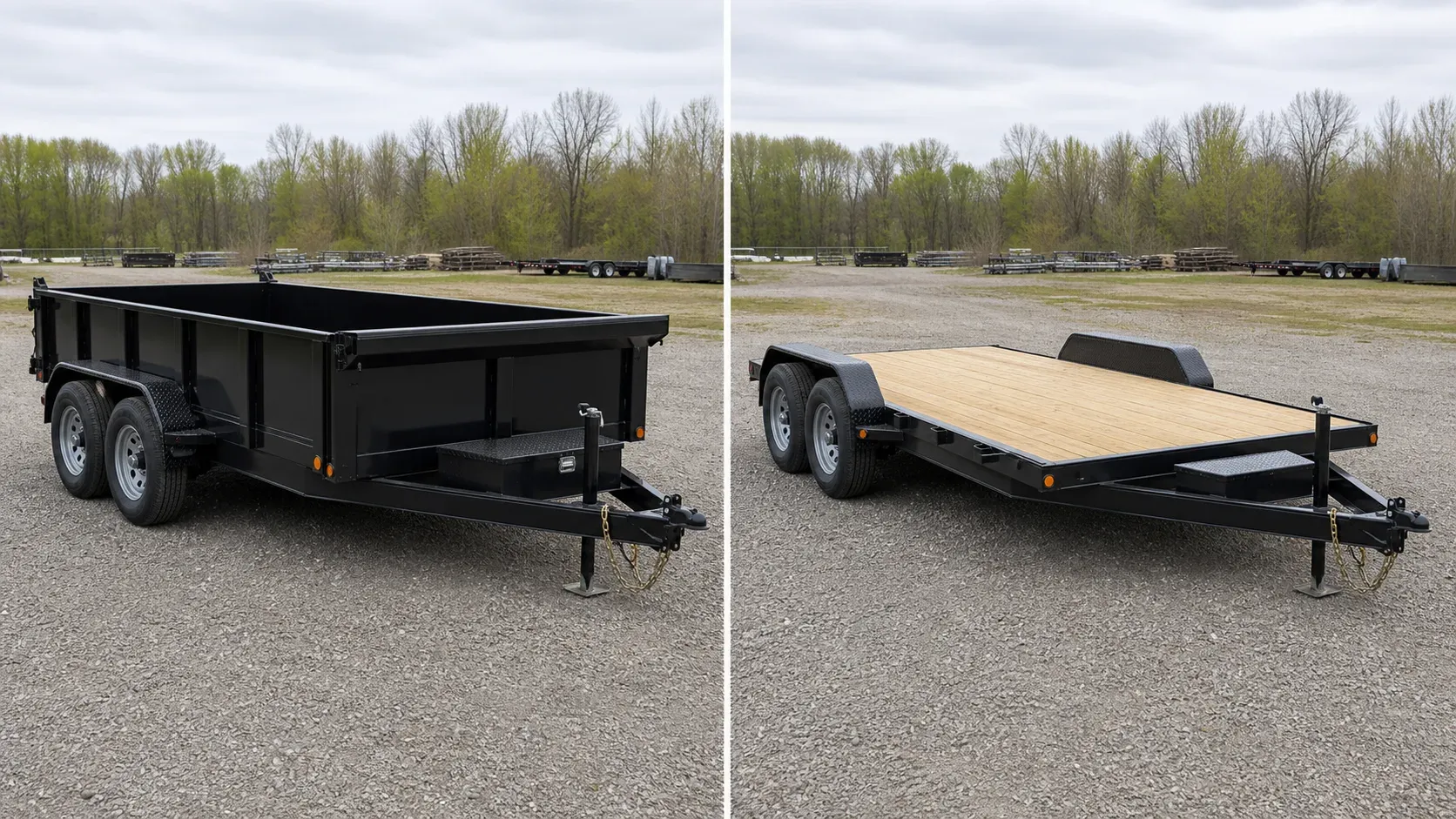
| Dump Trailer | Flatbed Trailer | |
|---|---|---|
| Best cargo | Loose material, debris | Machines, pallets, lumber |
| Unloading | Hydraulic, thirty seconds | By hand or machine |
| Empty weight | Heavier, box and hydraulics | Lighter, more payload per GVWR |
| Price | The premium | The baseline |
| Maintenance | Hydraulics on the calendar | Deck boards and bearings |
| Versatility | The box limits shapes | Anything with a flat bottom |
The two anchor different halves of the working world, and the buyer who needs both usually ends up owning both, in one order or the other depending on which cargo showed up first.
The unload is the product
The dump trailer's argument is the cylinder. Gravel, dirt, mulch, and demo debris load over the sides and leave in one tilt, and every yard that would otherwise go out by shovel is the trailer paying for itself. The material pages run the math, a 14K dump moving 4-to-5 yards of soil per cycle does work no deck can match, and the junk and demo trades built their fleets on it.
The debits are honest. The box and hydraulics cost 1,000-plus pounds of payload against a flatbed at the same GVWR, the pump, battery, and cylinder join the maintenance calendar, and the walls that hold material reject anything taller, wider, or longer than the box. The dump is a specialist that happens to be versatile, not the other way around.
The deck takes all comers
The flatbed's argument is the open format. Machines drive on, pallets fork on from any side, lumber and steel overhang where the law allows, and the securement system of stake pockets, rub rail, and chains replaces walls for less money and less weight. The payload advantage is structural. With no box steel and no hydraulics, more of the same GVWR goes to cargo, as the payload subtraction shows.
The debit is labor. Everything the flatbed hauls gets loaded and unloaded by hand, machine, or forklift, and loose material needs sideboards and a shovel, the job the dump deleted. Move material weekly and you feel that trade every weekend.
The cargo decides
Count the yards. Loose material moved regularly, more than a few loads a season, buys the dump and never regrets the premium. Machines, vehicles, and palletized or dimensional loads buy the flatbed or its equipment cousin and pocket the difference. Mixed work leans on frequency. The cargo you move weekly picks the trailer, and the cargo you move once a year you rent one for.
The class math runs the same on both sides, the 14K tier as the working standard, the three-quarter-ton behind it, and an honest scale ticket governing everything, since both trailers share those class pages.
Dump vs. flatbed FAQ
Can a dump trailer do flatbed work?
Inside the box's dimensions, yes, machines and pallets ride dump floors daily. Past the walls, no, and the box's payload tax rides along on every load.
Can a flatbed haul gravel?
With sideboards and a shovel or skid steer to unload, occasionally. As a regular job, that is the dump's whole reason for existing.
Which is cheaper to own?
The flatbed, at purchase and over the years, with no hydraulics to maintain and fewer parts to fail. The dump earns its premium in labor saved.
Which holds value better?
Both resell well in the working classes. Dumps with sound hydraulics move fast, flatbeds with clean decks move faster, and condition outranks category.
What truck do they need?
The same class math, three-quarter-tons at the 14K standard both trailers center on, as the capacity pages lay out.