Deckover Tilt Trailers Explained.

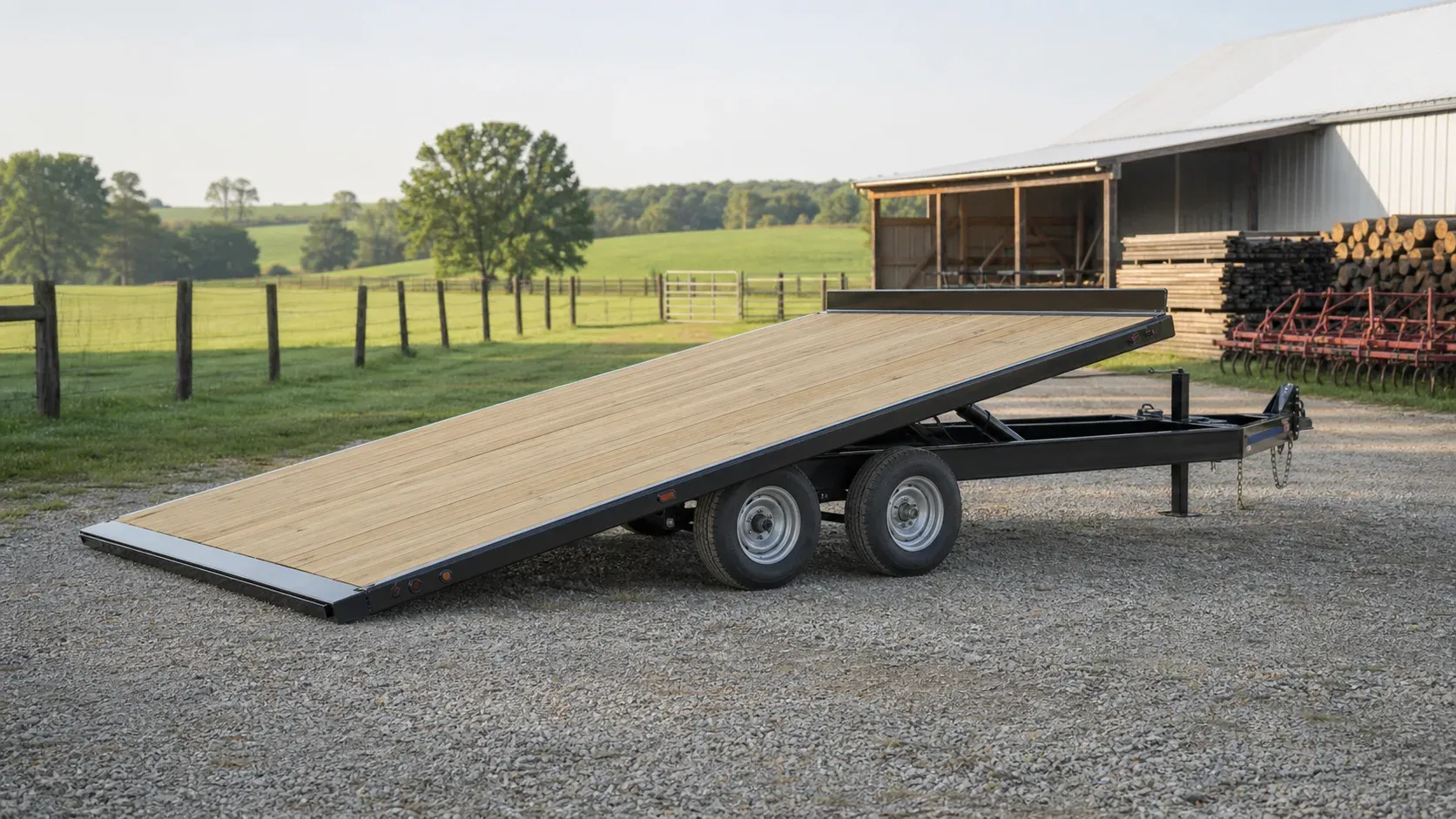
The deckover tilt pairs the full-width 102-inch deck with a powered tilt mechanism. It loads the wide machines that fender-well decks refuse, at angles the deckover's height would otherwise prevent. This is the tilt family's width answer and its heaviest configuration, hydraulic almost universally and priced accordingly. Wide iron that can't climb ramps buys it. Everyone narrower should read the standard tilt pages first.
Full width, laid flat on command
The deckover tilt solves the deckover family's own contradiction. The deck-above-the-wheels layout buys the full 102-inch width and pays for it in height, 32-plus inches that turn every drive-on load into a steep-ramp negotiation. The tilt mechanism refunds that height at loading time, since the whole wide deck pivots into a single plane that wide machines simply walk up. Width without the climb, in one sentence.
The customer is dimensionally specific. Think machines whose stance exceeds the fender-well decks' 76-to-83 inches: wide-track lifts, turf and ag equipment, dual-wheel machines, and anything wide and low enough to defeat both the standard tilt's width and the deckover's ramps at once. For that intersection, the deckover tilt is the only answer below the gooseneck hydrotail's money, and the two bracket the same buyer at different weights.
The mechanism is hydraulic almost without exception, because the full-width deck's steel makes gravity balance impractical at these masses. So the pump-and-cylinder system, its battery care, and its manual-release check all come standard, as the powered page explains. The deckover guide covers the width side of this configuration and this page owns the mechanism side. Read them together if you're standing at the intersection.
Tilting the wide deck
The structure works harder than any other tilt. The full-width deck spans 102 inches with no fender structure to share the load, crossmembers sit at 16-inch centers to carry wide point loads, and the pivot hardware is scaled to a deck whose empty steel alone outweighs some light trailers' payloads. Pivot pin diameter, cylinder bore, and the frame's pivot-mount gussets are the walk-around's first three stops, since this configuration concentrates the family's stresses at its heaviest scale.
The loading geometry banks the height refund. The tilted 102-inch plane runs 8-to-11 degrees depending on deck length and height, and wide machines track up it without the fender-well squeeze or the ramp-width aim. The guide's traction and transition notes apply across the wider span, and on a plane this wide, a deck edge that meets the ground evenly is a real build-quality tell.
The height tax returns after loading. The leveled deck rides at deckover altitude, with the cargo's center of gravity up there too, so the deckover family's stability discipline transfers whole: loads low and centered, honest speeds in crosswind. Verify the tilt's travel latch before every tow, the way the family rules demand.
The hydraulic system runs the powered page's playbook at heavier duty. Expect a bigger cylinder, a heavier draw, and a mandatory charge line, and expect the payload subtraction to collect the widest steel bill in the family.
Deckover tilt sizes and payload
| Class | Typical GVWR | Typical Payload | Common Fit |
|---|---|---|---|
| 20 to 22 ft, 14K | 14,000 lb | 9,000 to 9,800 lb | Wide compacts, turf equipment |
| 22 to 26 ft, 16K | 15,000 to 16,000 lb | 10,200 to 11,400 lb | The configuration's standard |
| Gooseneck deckover tilt | 20,000 to 22,000 lb | 13,200 to 15,200 lb | Wide heavy iron |
The classes start where the standard tilt's end, with the wide deck's steel setting the floor. The gooseneck versions cross into the neck's math, meaning pin weight, one-tons, and the CDL line that the family's heavy tiers all trigger. Bumper-pull versions hold the 14-to-16K classes behind three-quarter-ton trucks, with the weight-distribution note the tall wide load earns.
The empty-weight comparison matters more here than anywhere else in the family. The wide deck, the pivot, and the hydraulics stack the heaviest empty bill per foot, so the scale-ticket difference between builds is real daily capacity. The deckover guide gives the same warning.
The deckover tilt's ledger
The buying rule. Use the tape measure and the clearance gauge together. Machines past 83 inches of stance that can't climb ramps buy the configuration, and everything narrower or more athletic reads the cheaper pages first.
Deckover tilt FAQ
Why pair a deckover with a tilt?
The deckover's width comes with height that defeats drive-on loading, and the tilt refunds the height at loading time. Wide machines that can't climb are the whole market.
Are deckover tilts gravity or hydraulic?
Hydraulic almost universally, because the wide deck's steel makes balance-point operation impractical. The powered page's system and care apply in full.
What angle does the tilted wide deck run?
Eight-to-11 degrees depending on length and height, and gentler than the deckover's ramp alternatives by the whole design's intent.
What truck does the configuration need?
The 14-to-16K bumper-pulls want three-quarter-ton math with the tall-load notes, while the gooseneck versions run one-ton pin-weight arithmetic.
Deckover tilt or hydraulic dovetail?
Weight decides. The deckover tilt serves wide iron through 16K bumper-pull and light gooseneck, and the hydrotail owns the heavy classes above. Same customer, staged by tonnage.
Is the leveled deck stable at height?
Loaded low and centered per the deckover family's discipline, yes, and with the crosswind respect every tall wide load earns. The tilt changes loading, not towing.