Ramp-Door Enclosed Cargo Trailers Explained.

The ramp door turns the enclosed trailer's rear wall into its loading ramp. It's spring-assisted, rated for whatever rolls up it, and it's the reason most cargo boxes hauling anything with wheels order it. It loads the mowers, bikes, cars, and carts a barn door makes you lift, costs a modest premium, and comes down to three specs: the door's load rating, the health of the spring system, and the transition where the ramp meets the ground.
The wall that lays down
The ramp door is the enclosed cargo answer to wheels. The rear wall hinges at the floor and lowers on spring assistance to become the ramp, so everything that rolls, mowers, motorcycles, cars, carts, and dollies, boards under its own wheels instead of going over a bumper. The other option, barn doors, swings open for hand loading and forklift access but makes you lift or separately ramp anything with wheels.
The choice tracks what you actually haul. If wheeled cargo goes in and out every week, buy the ramp, which is why the contractor and powersports builds standardize it. Hand-load and dock-load duty keeps the barn doors for their full-height opening and forklift access. Mixed duty leans ramp, since the door still opens fully, and the side door handles walk-in traffic either way.
The buyers are anyone whose cargo has axles. Landscape crews rolling mowers, the powersports and car crowd, contractors wheeling compressors and carts, and the moving and household folks with appliance dollies. That breadth is why the ramp door is the single most ordered option on working cargo boxes.
Springs, ratings, and the transition
The mechanism is a torsion or extension spring system that balances the door's weight, so one hand can lower and raise a wall that weighs real pounds. The health of that system is the whole ownership story. A healthy door lowers under control and lifts light, a tired one drops fast and lifts heavy, and adjusting or replacing the springs is the first thing the walk-around checks, with the cables and hinges getting a look in the same glance.
The load rating is the spec people skip, and they shouldn't. Doors carry ratings from light powersports duty up through 3,000-plus-pound car-and-equipment spec, and the rating has to cover the full weight of the rolling load on the door mid-climb. Anyone hauling a car or a compact machine orders the heavy-spec door on purpose, with a reinforced frame, tighter crossmembers under the plywood or plank surface, and hardware to match.
The transition is the third spec, where the ramp edge meets the ground. Low-clearance cargo wants a transition flap, the hinged extension that softens the break in the angle, and the car-hauler build covers that geometry. Every ramp also wants honest traction, since wet plywood under street tires is the classic loading mishap. On doors that work daily, backed-out deck screws and surface wear are the recurring inspection items.
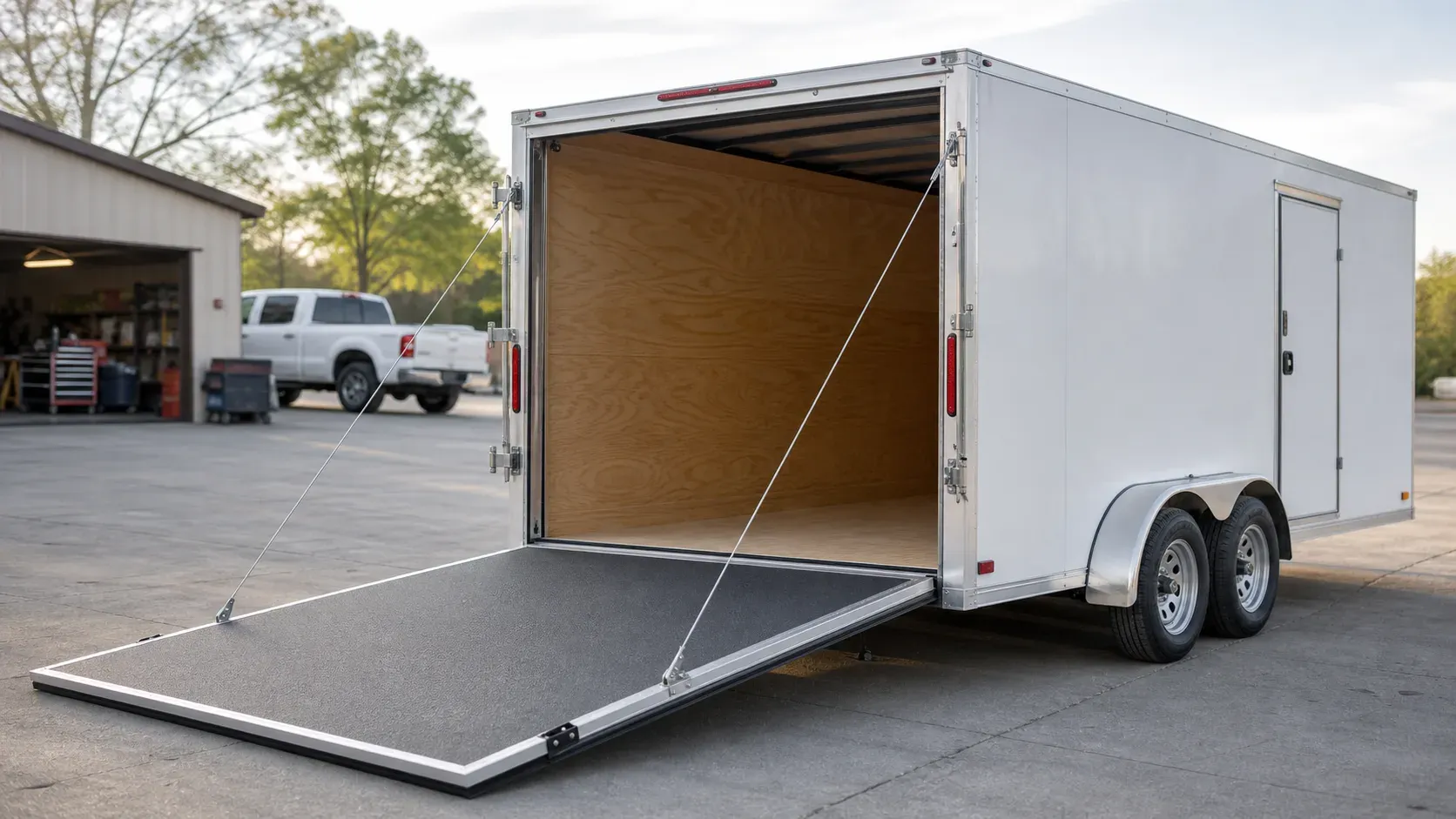
Ramp doors across the box sizes
| Box Size | Typical Door Duty | Common Cargo |
|---|---|---|
| 5x8 to 6x12 | Light-to-standard spec | Bikes, mowers, carts |
| 7x14 to 7x16 | Standard-to-heavy spec | Contractor loads, UTVs |
| 8.5x20 and up | Heavy, car-rated | Cars, machines, race duty |
The door spec follows the box's mission, and the class math runs the same underneath, with the door adding modest weight the payload subtraction counts. On the biggest boxes the door runs full width, and the v-nose or flat-front question is separate from it. The rear-frame reinforcement a heavy door needs is a build-quality item worth reading on the spec sheet, and the main guide covers the structure.
The ramp door's ledger
The buying rule is to count the wheels. Cargo that rolls in weekly gets the ramp door at the correct rating, hand-and-dock duty keeps barn doors, and a mixed fleet orders the ramp and never regrets the range it buys.
Ramp door FAQ
Ramp door or barn doors?
Wheeled cargo buys the ramp, dock and forklift duty buys barn doors. Mixed use leans ramp, since it still opens fully, and the side door handles foot traffic.
How much weight can a ramp door hold?
It depends on the spec, from light powersports duty up through 3,000-plus-pound car-rated builds. The rating covers the rolling load mid-climb, so order against the heaviest thing that will ever roll up it.
Why is my ramp door heavy to lift?
The spring system has lost adjustment or a spring, and that's the door's one real wear system. Adjustment is routine service, and a door that slams is warning you before it hurts someone.
Will a low car clear the ramp angle?
Measure it. The box height and door length set the angle, and the transition flap softens the break. The car-hauler build walks through the full geometry.
Does the ramp door cost payload?
A little. The door and reinforcement weigh more than barn doors, and the payload subtraction counts it like every other option.
Can I load a car through a ramp door?
On a car-rated door in the big boxes, yes, every day. That's the whole point of the enclosed car hauler. On a standard-duty door, no, the rating is the law.