Enclosed Motorcycle Trailers Explained.

An enclosed motorcycle trailer carries bikes upright, chocked, and strapped, out of sight and out of the weather. That last part matters, because motorcycles are among the easiest vehicles in America to steal. A 6x10 single-axle hauls one or two bikes behind almost anything, and a 6x12 or 7x12 handles the group ride. Spec the wheel chocks and floor anchors first. The box is just weather protection. The chock system is what makes it a motorcycle trailer.
What an enclosed motorcycle trailer is
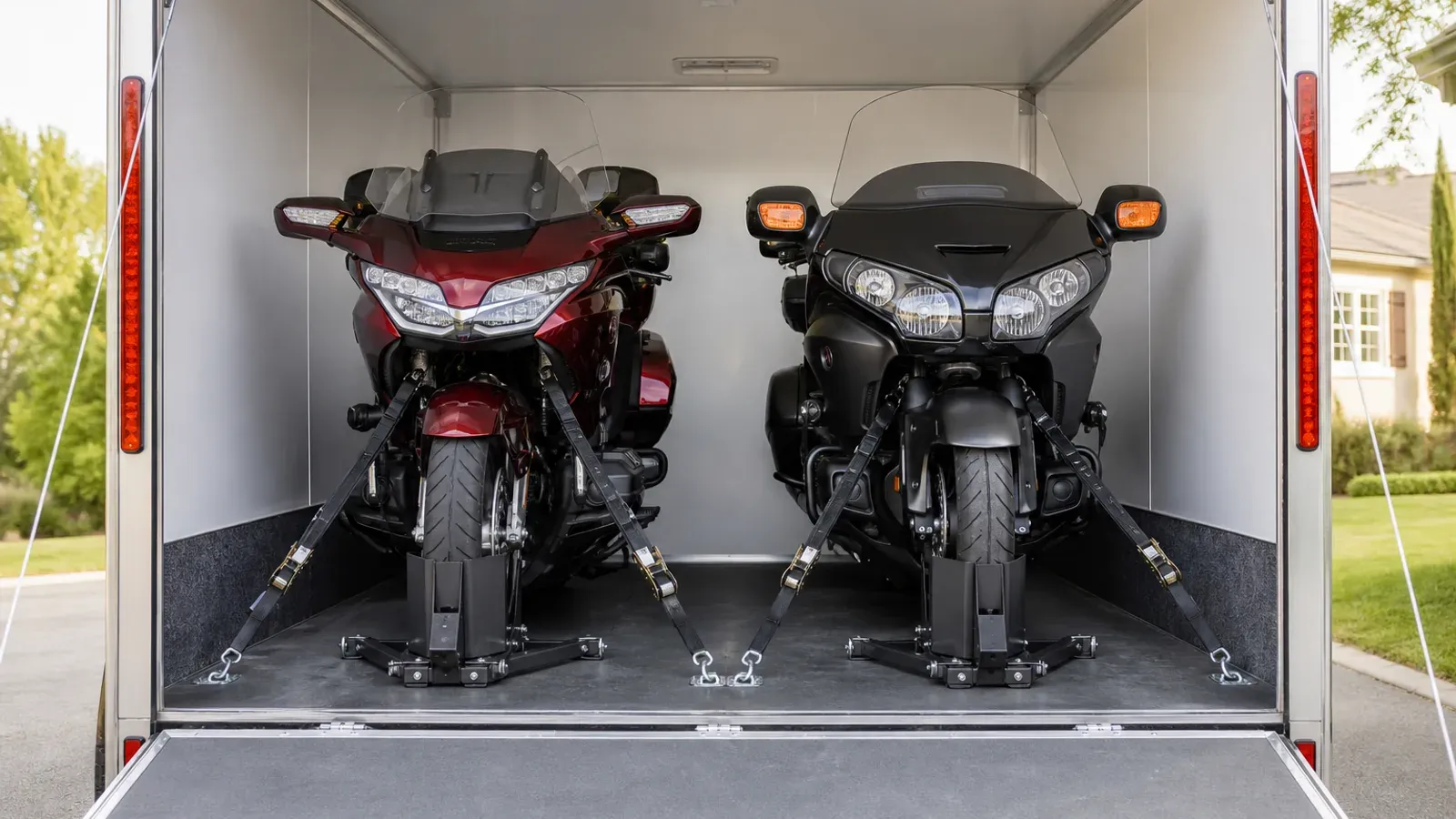
An enclosed motorcycle trailer is a compact cargo box built around a hard problem, hauling something that balances on two wheels and would rather fall over. Wheel chocks bolt to a reinforced floor, tie-down anchors surround each bike's stance, and the interior clears bars and windshields. The walls handle the two threats every rider knows, weather that shows up mid-trip and thieves who treat motorcycles as easy pickings.
The security case comes first for a reason. Bikes are light, valuable, and easy to roll away, gone in the time a fuel stop takes, and an open trailer full of motorcycles at a motel is the kind of thing you leave out overnight only once. A locked box hides the bikes and stops the roll-away both, which is why touring groups, racers, and anyone whose bikes sleep away from home run enclosed by default. The trailer often costs less than a single season's added theft-risk premium on the bikes it carries.
Weather is the other half of the case. Rain at highway speed scours paint, sun bakes it, and winter road brine corrodes everything it touches. A bike that shows up at the rally needing three hours of detailing came on an open trailer. Inside the box, bikes travel in showroom condition, and the trailer doubles as the dry garage your destination won't have.
Sizing comes down to bike count and bar width. One bike rides a 5x8, two fit a 6x10 or 6x12 staggered, and three or four want a 7x12 to 7x14 with a chock row. Figure length as wheelbase plus loading room, and most full-size bikes want 8-plus feet of clear floor. Interior height clears most windshields at 6 feet, though tall touring rigs and choppers deserve a tape measure, and the ramp door's width and angle decide whether load-in is a walk or a fight.
Chocks, straps, and the load-in that doesn't drop a bike
The wheel chock is the most important part of the trailer. A good chock captures the front wheel and holds the bike upright hands-free, which turns solo load-in from a balancing act into a parking job. A stamped-tin cradle and a real self-locking chock are not the same tool. Bolt chocks through the floor into structure, crossmembers or backing plates, never into plywood alone, because the chock takes the whole bike's leverage in every panic stop.
Strapping is four-point compression, bike version. Two front straps from the triple tree or bar anchors, pulled until the forks compress about a third of their travel, then two rear straps square to the frame or swingarm, with soft loops anywhere paint or chrome lives. Done right, the bike becomes part of the trailer. Handlebar-only strapping bends bars and misses the geometry, and loose-fork strapping lets the bike bounce itself free. Those are the two mistakes that end up as garage stories. E-track runs at floor and rail height let you adjust anchor geometry per bike, which is the answer for a fleet.
Load-in is where owner skill shows. Riding in works for the confident on a low ramp when the door aperture allows it, walking in beside the bike is the answer that always works, and a center walkway between chock rows keeps a multi-bike box loadable after the first bike parks. Interior lighting, white walls, and a side door to get yourself out round out the setup, and a winch is the trials-and-project-bike accessory nobody regrets buying.
Weight is the easy part here. Bikes run 400 to 900 pounds, so even a four-bike load with gear sits comfortably in the 7,000-pound class, and a two-bike box stays honest on the 2,990 single-axle. Tow vehicles follow suit, SUVs handle the small boxes and any half-ton shrugs off the big ones. The only real variable is the wind. A light load in a tall box is all sail, so watch the gusts and keep tongue weight honest by parking the bikes forward.
Motorcycle trailer sizes by fleet
| Class | Typical GVWR | Bikes | Fit Notes |
|---|---|---|---|
| 5x8 single axle | 2,990 lb | 1 | Any single bike, check length |
| 6x10 to 6x12 single | 2,990 to 3,500 lb | 2 | Staggered chocks, the pair standard |
| 7x12 to 7x14 tandem | 7,000 lb | 3 to 4 | Chock row, walkway, group rides |
| 7x16 tandem | 7,000 lb | 4 plus gear | Race programs, rally rigs |
Length matters more than width here. A long-wheelbase tourer or chopper wants 8-plus feet of clear floor past the chock, and the V-nose triangle earns its keep as helmet, gear, and tool storage that doesn't eat into bike floor. Height at the door aperture either clears the windshield or it doesn't, so measure before you put money down. The tall-screen touring crowd learns this one the hard way every year.
Payload never crowds the class, so your spec money goes into the systems, chock quality, anchor count, lighting, and the frame material question for salt-state tourers whose trailers chase riding season across winter roads.
Where the enclosed bike trailer wins and loses
The buying rule. Spec the inside like it's the product, because it is, chocks, anchors, lighting, and walkway. Then size the box to your fleet count plus one, since riding groups only grow. The bike that joins next season is cheaper to plan for now than to buy a new trailer for later.
Enclosed motorcycle trailer FAQ
What size enclosed trailer for two motorcycles?
A 6x10 or 6x12 with staggered chocks handles two full-size bikes with room to walk. A single rides a 5x8, and groups of three or four want the 7x12 to 7x14 tandems.
How do I strap a motorcycle in a trailer?
Four points. Front pair from the triple tree, compressing the forks about a third, rear pair square to the frame or swingarm, and soft loops on any finished surface. The bike should feel like part of the floor.
Do I need a wheel chock?
For solo loading and any serious mileage, yes. A real self-locking chock holds the bike upright hands-free and anchors the strap geometry. It's the most important part on the trailer.
Can an SUV tow a motorcycle trailer?
Comfortably, in the one- and two-bike classes, where loaded weights stay light. Check your rating, mind the box's wind profile, and read the SUV towing page for the honest math.
Will my touring bike's windshield fit?
Measure the door aperture height, not the interior peak, against the bike's tallest point. Six feet clears most bikes, but tall screens and choppers deserve the tape.
Enclosed or open for motorcycles?
Open hauls for less, enclosed takes theft and weather off the table. Bikes that sleep away from home, tour across seasons, or carry collector value make the enclosed case on their own.