V-Nose vs. Flat Front. Which Enclosed Trailer Shape to Buy.

The V-nose adds a wedge of bonus space and a modest fuel edge. The flat front keeps a full bulkhead wall and packs rectangles without waste. The mileage difference is smaller than the arguments people have about it. Buy the V if wedge-shaped gear, sleds, bike wheels, cabinets, generators, is in your load-out. Buy flat if pallets, boxes, and shelving are. Your cargo's shape picks the trailer's.
V-nose vs. flat front at a glance
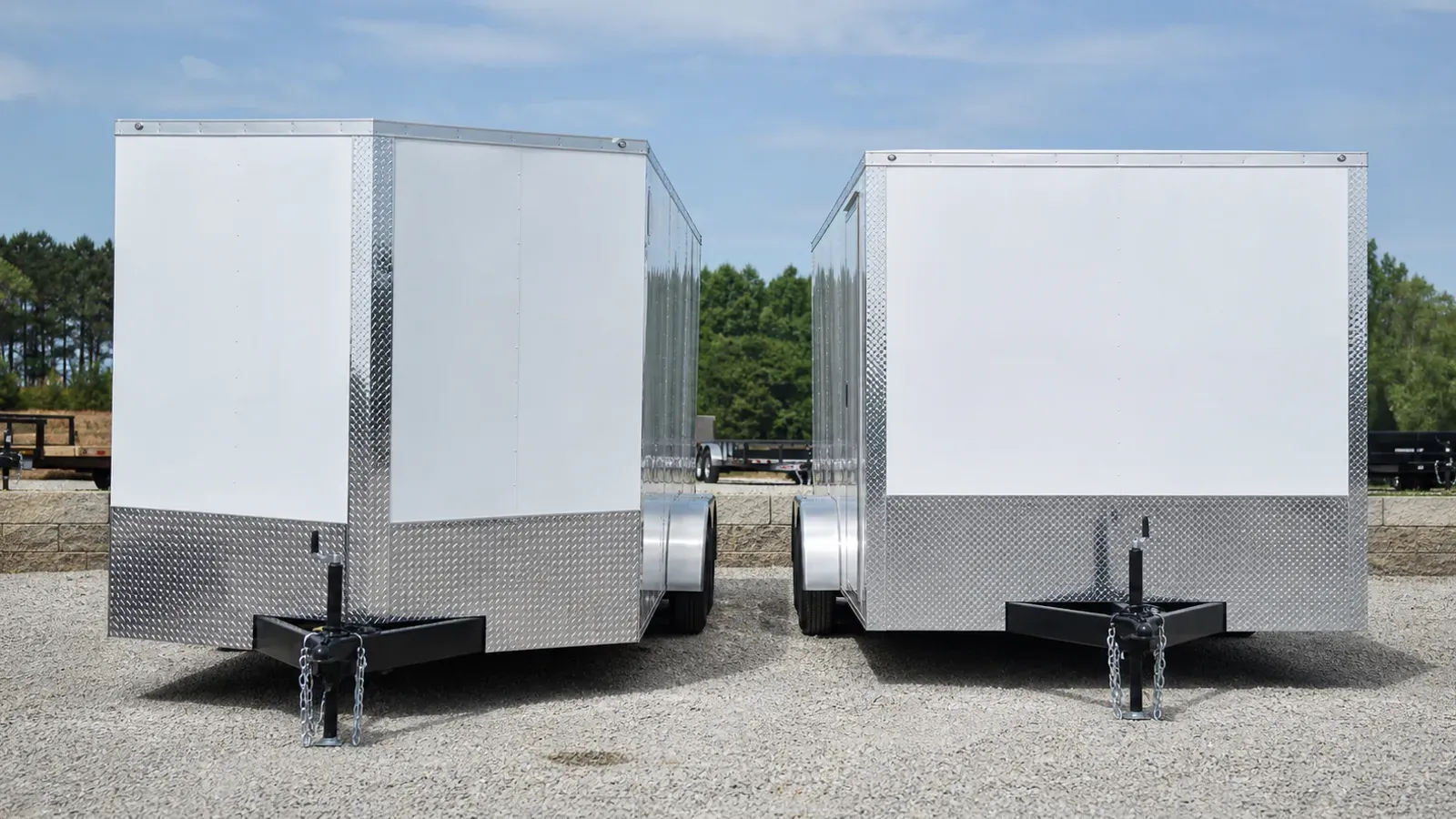
| V-Nose | Flat Front | |
|---|---|---|
| Nose space | Bonus wedge, 15 to 25 sq ft | None, wall starts the box |
| Front wall | Angled, awkward for shelving | Full flat bulkhead |
| Fuel at highway speed | Modest edge | The baseline |
| Rectangular packing | Wedge goes unused | Every inch loads |
| Price | Small premium, often minor | The baseline |
| Market presence | The current majority | The classic |
Behind the first 2 to 4 feet it's the same box, the same frames, walls, and doors, the same everything the guide covers. The V-nose page and flat-front page detail each build. This page settles the shape.
The bonus room and the breeze
The V's honest headline is the space, not the speed. The wedge adds 15 to 25 square feet of floor that length badges mostly don't count and builders mostly don't charge full rate for, a bonus room shaped exactly like the clutter every working trailer accumulates. Spare tires stack in the point, generators and fuel jugs shelve across it, motorcycle front wheels nose in naturally, and snowmobile skis were practically the shape's design brief. The V-cabinet packages the industry builds for that spot turn the point into the trailer's toolbox.
The fuel story is real and modest. The angled nose smooths what the flat wall slams, reports cluster around a half to one mile per gallon at highway speed, and the effect grows behind low tow vehicles and shrinks behind tall ones whose wake shields the nose anyway. High-mileage haulers compound it into real money, while weekenders notice the reduced wind roar before the pump. Treat the mileage as the tiebreaker, never the reason to buy.
Then the downsides. The angled walls frustrate front shelving and workbench runs, the exact real estate a contractor build prizes. Rectangular freight can't use a triangle, so pallet operations waste the wedge entirely. And the point adds seams and a post that cheap builds flex and leak at, an inspection item the flat wall never presents.
The honest rectangle
The flat front's argument is that boxes are box-shaped. A full-height, full-width bulkhead wall takes shelving, E-track, cabinets, and workbench mounts corner to corner, and a rectangular floor packs pallets, appliance boxes, and sheet goods without a wasted cubic foot. Freight operations, movers, and trades whose build-out starts at the front wall pick flat for exactly this. The wall is the feature.
Simplicity rides along. Two fewer wall seams, no point post, marginally less skin and steel, and a shape that shrugs at the leak-path question the V's point raises on budget builds. Price runs a touch under the equivalent V in most catalogs, and in fleet quantities the difference adds up.
The downside is the missing wedge and, in some regions, the market's opinion. V-country resale, powersports and race belts especially, expects the point and discounts its absence, while freight and trade markets don't care at all. Know which market the trailer will retire into.
Which shape you actually need
Walk your load-out through the nose. Sleds, bikes, tires, a generator, or a V-cabinet package, and the wedge earns its spot and the V wins. Pallets, boxes, a shelving plan, or a front workbench, and the flat wall wins while the wedge would have been sculpture.
Miles break the ties. Past 15,000 highway miles a year the V's fuel edge compounds into a real line item, and under that it's noise. Build quality outranks shape entirely, since a well-built flat front beats a leaky V at any mileage. Spend the shape premium on the wall-post spacing and roof build first, because the guide's checklist doesn't care about the nose.
The market has mostly voted V, which means flat fronts occasionally price like the value they are on dealer lots. A rectangle shopper who finds a flat-front discount is the quiet win of this whole comparison.
V-nose vs. flat front FAQ
Does the V-nose really improve gas mileage?
Modestly, roughly a half to one mpg at highway speed, more behind low vehicles and less behind tall ones. Real for high-mileage haulers, a rounding error for weekend use.
How much extra space does the V add?
Fifteen to 25 square feet of wedge-shaped floor on common widths, usually not counted in the length badge. Ask how the builder measures, then check the flat floor length, which matters most.
Is the V-nose stronger in a crash or crosswind?
No meaningful difference either way. Crosswind behavior follows side profile, which is identical, and the point is a packaging feature, not a structural one.
Why do contractors often pick flat fronts?
The bulkhead wall. Shelving, cabinets, and bench mounts want flat real estate, and the build-out starts right where the V would have angled away.
Which is worth more at resale?
It's regional. Powersports and race markets expect the V and pay for it, while freight and trade markets are indifferent. Sell into the market you bought for and the shape premium survives.
Can I get the V space benefits on a flat front?
A tongue-mounted box recovers some forward storage on any trailer, and it's the flat-front owner's standard answer for the generator and strap bin.