Best Trailers for Moving and Household Hauling.

Household hauling is a volume game with fragile stakes. Furniture is bulky, light, and easily ruined by weather. The purpose-built answer is the enclosed cargo trailer: a 6x12 tandem swallows an apartment, and a 7x16 handles most houses in a couple of trips. An open utility trailer does the same work cheaper under tarps and straps. And for a true one-time move, renting still beats buying. This guide is for anyone who hauls household more than once.
What a household actually measures
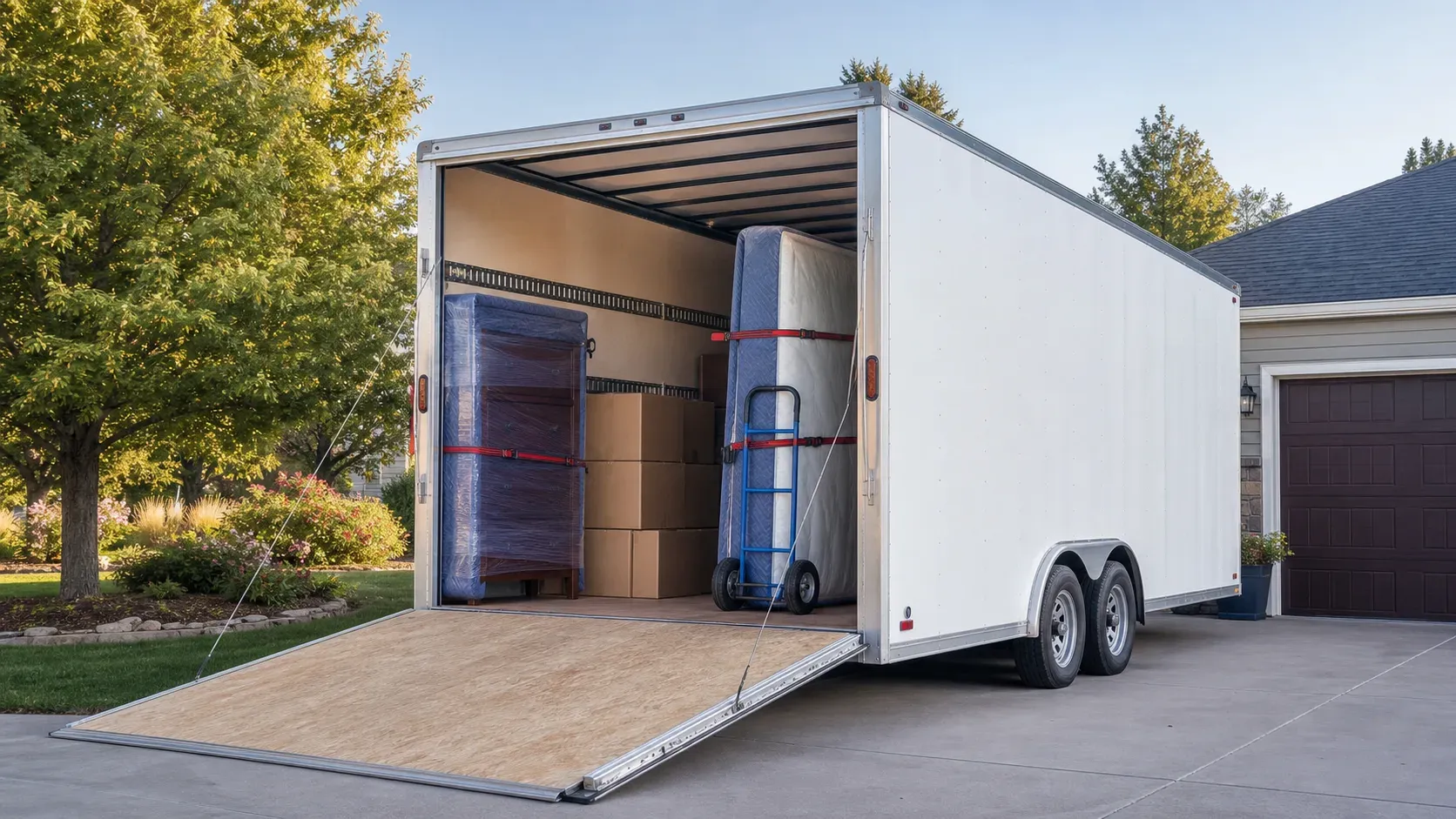
Household loads flip the usual trailer math. Furniture and boxes run light, and a full 6x12 enclosed load rarely passes 2,500 pounds, so weight almost never decides anything. Volume does, and the industry measures it the way movers do, in cubic feet per room.
| Home Size | Typical Volume | Trailer Trips |
|---|---|---|
| Studio or dorm | 250 to 400 cu ft | One 5x8 to 6x10 enclosed |
| One-bedroom apartment | 400 to 600 cu ft | One 6x12 enclosed |
| Two-bedroom | 700 to 1,000 cu ft | One 7x14 to 7x16, or two 6x12 trips |
| Three-bedroom house | 1,200 to 1,800 cu ft | One 8.5x20-plus, or multiple trips |
The shapes give you more trouble than the weights. A couch needs diagonal room, a mattress needs a flat wall, and appliances need a ramp and a dolly. Interior height matters more than buyers expect. A 6.5-foot ceiling stands a fridge upright and a 6-foot ceiling doesn't, and you'll discover the difference at the worst possible stair landing.
The stakes are the other half of the spec. Household goods are the rare load that's both irreplaceable and easily wrecked by rain, from grandma's dresser to the mattress everyone sleeps on tonight. Containment, weather protection, and security aren't upgrades here, they're the whole point, and that's why the enclosed box owns this use case.
Best trailers for household work, ranked
The purpose-built answer is the enclosed cargo trailer. The 6x12 tandem is the household sweet spot: an apartment in one trip, weather and theft handled, and a ramp door for walking appliances aboard on a dolly. The 7x14 and 7x16 step up to multi-room loads with interior heights above 6.5 feet, and for this duty the ramp versus barn door call leans ramp. Add E-track or wall D-rings to turn the box into a proper van. Strap furniture to bare walls and you'll learn why mirrors break.
The value answer is the tandem utility trailer under tarps and straps. The same volumes ride cheaper on an open deck, the weather bet is yours to make, and the trailer's other 300 uses come free. Households that haul regularly, whether for kids' apartments, marketplace furniture, or the family shuffle, often run exactly this: a 6x12 or 7x14 utility with a tarp kit and a strap bin.
The honest answer for a true one-time move is the rental counter. A weekend rental costs a fraction of ownership and vanishes when you're done, and no buying guide worth reading will pretend otherwise. Ownership starts winning when the hauling repeats, which is exactly the reader we're writing for. The enclosed versus open comparison settles the repeat-hauler's real decision.
Loading a household without breaking it
Load like a mover: heavy items low and forward, square things first. Put appliances and dressers against the front wall over the tongue weight target, brick-stack boxes to the ceiling in tiers, and panel the walls with mattresses and framed art. The couch goes in last on its diagonal, with soft goods packed into the gaps around it. Strap each tier before you start the next, letting E-track and furniture pads do the work blankets and hope used to.
Weight stays real even when the load feels light. A packed 7x16 with tools, books, and a garage's worth of boxes can crowd 4,000 pounds, true tandem-class territory where the brake controller earns its keep. That tall box behind a half-ton or SUV also catches wind, so keep your highway speeds honest. And pack books in small boxes, always.
The open-deck version adds a weather routine. Lay a tarp over padding, strap it at every grommet, keep nothing above the rail line that isn't tied through it, and re-check at ten miles because tarps and straps both settle. Rain ruins particle board fast, and the securement rules that govern every load matter most for a mattress, which will act like a sail the moment it comes loose.
Moving and household FAQ
What size enclosed trailer for a one-bedroom apartment?
The 6x12 is the standard answer. Its 400 to 600 cubic feet swallow a one-bedroom if you pack with discipline. Step up to a 7x14 for margin or heavier furnishings.
Can I move a house with a utility trailer?
In trips and under tarps, absolutely, and it's the value play for repeat haulers. You're trading weather risk and strap labor against the enclosed box's higher price.
Should I buy or rent for a move?
For a one-time move, rent. The math isn't close. Ownership wins once the hauling repeats, for kids, marketplace furniture, or the family circuit, and that's when trailer choice starts to matter.
What interior height do I need?
Six and a half feet stands most refrigerators upright and lets an adult load without stooping. Standard 6-foot boxes work fine, and they'll remind you why the taller option exists.
Can an SUV tow a moving trailer?
A loaded 6x12 enclosed lands at 3,500 to 4,500 pounds, inside many SUV ratings if you have brakes and run honest math. The bigger boxes loaded push you toward the half-ton conversation.
How do I keep furniture from shifting?
Load in tiers, strap every layer, pad everything wood, and anchor to E-track or D-rings. A load packed tight enough to walk on won't shift, and that's the mover's standard.