Trailer Suspension Explained.

Leaf springs with equalizers run the trailer world. They're cheap, repairable, and they share load across tandem axles. Torsion axles ride smoother and mount lower at a premium, but without equalization. Slipper springs serve heavy simplicity, and air ride pampers premium freight. The working market runs leaf for good reasons, the upgrades earn their cost in specific jobs, and worn bushings are the maintenance story nobody checks.
Four ways trailers ride
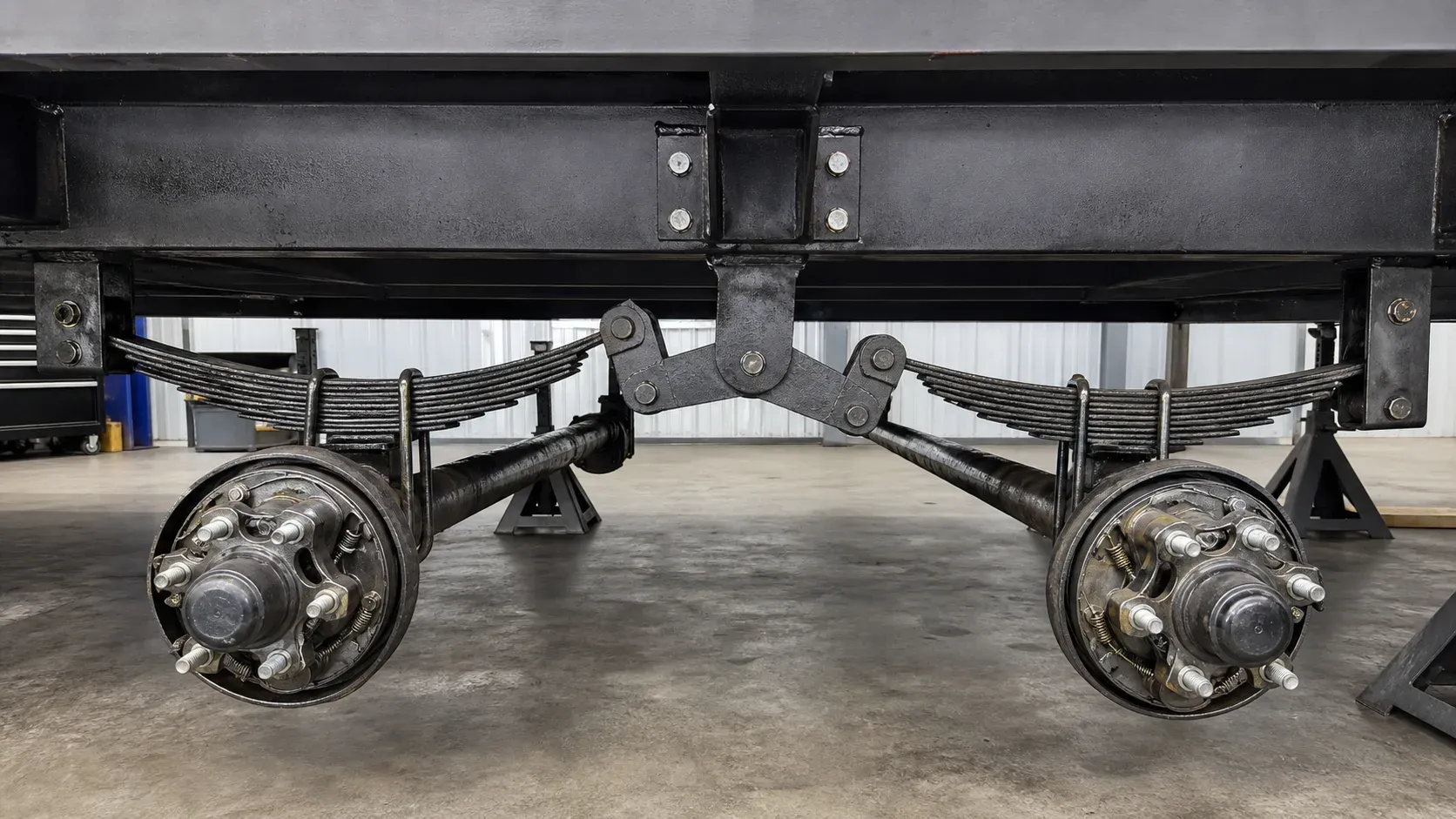
Leaf springs are the standard, stacked steel arcs between frame hangers, double-eye springs on shackles across the light and middle classes. The tandem pair's equalizer is the design's quiet genius, a rocking link that transfers load between axles over bumps so all four tires share honestly, per the axle page. They're cheap to build, rebuildable in any town, firm-riding, and the whole working market's default.
Torsion axles suspend each wheel on rubber cords inside the axle tube, so they're independent, smooth, and sealed against weather, and they mount low enough to enable the low-profile builds that need the inches. The trades are a real premium, no equalization between tandem torsions so each axle wants rating margin, and damage that replaces the tube whole where leaf packs rebuild leaf by leaf. Comfort, corrosion country, and deck height buy it.
Slipper springs simplify the heavy end, one spring eye hung and the other end sliding in a frame box, fewer moving parts at high capacity, and a frequent choice on the heavy commercial tiers. Air ride tops the market, bags and shocks smoothing freight that pays for smoothness, common on premium enclosed haulers and heavy decks, at real cost and complexity plus an air system on the maintenance calendar.
Picking and keeping a suspension
Pick by the job, not by fashion. Working trailers at every class keep leaf springs and bank the difference, since the equalized tandem is most of what suspension needs to do. Torsion earns its premium hauling vibration-sensitive cargo, the rack-isolation logic writ large, in salt states where sealed beats sprayed, and wherever deck height is the spec. Air ride gets bought by the freight's requirements, and slipper simplicity by the heavy tiers' duty math. Every page on this site that mentions ride quality is running this table quietly.
The maintenance story is bushings and hardware, the part inspections skip. Spring eyes and equalizer pivots ride on bushings that wear oval and announce themselves as clunks over bumps, uneven tire wear, and a trailer that wanders. Wet-bolt kits with greaseable pivots are the working upgrade that makes the wear serviceable. Torque-check shackles, hangers, and U-bolts annually, eye the springs for cracked or flattened leaves, and check torsion tubes for lost ride height, the tell of an aging cord, and air systems for leaks and bag rot. Suspension fails slowly and telegraphs everything, so the annual crawl-under with a flashlight reads it all.
Suspension FAQ
What suspension do most trailers have?
Leaf springs with tandem equalizers, the market's default, cheap, repairable, and load-sharing. The upgrades exist for specific jobs, not general superiority.
Are torsion axles worth it?
For ride-sensitive cargo, low deck height, and corrosion country, yes, at the premium. For working economics and equalized tandems, leaf keeps the money.
Why does my trailer clunk over bumps?
Usually worn spring-eye or equalizer bushings, the oval wear that also scallops tires and wanders lanes. Wet-bolt kits make the fix serviceable.
What's an equalizer?
The rocking link between tandem leaf springs, transferring load between axles over bumps so all four tires carry. It's the tandem design's quiet genius, per the axle page.
Do trailers have shocks?
Mostly not, since leaf and torsion designs damp internally. Air-ride and premium torsion setups add them where freight pays for the smoothness.
What suspension maintenance matters?
The annual crawl-under, checking bushings, shackles, U-bolt torque, spring condition, and torsion ride height. It all telegraphs before it fails.