Steel vs. Aluminum Trailers. Which Material to Buy.

Steel is stronger per dollar, easier to repair, and the working world's default. Aluminum weighs less per foot, never rusts, and holds its resale, though you pay 30 to 50 percent more up front for it. If you run out of payload or live where corrosion eats trailers, coastal, winter roads, tight weight limits, buy aluminum and keep it for decades. If your duty is heavy and your budget is tight, buy steel and repaint it when it needs it. Your duty cycle makes this call, not the salesman on the lot.
Steel vs. aluminum at a glance
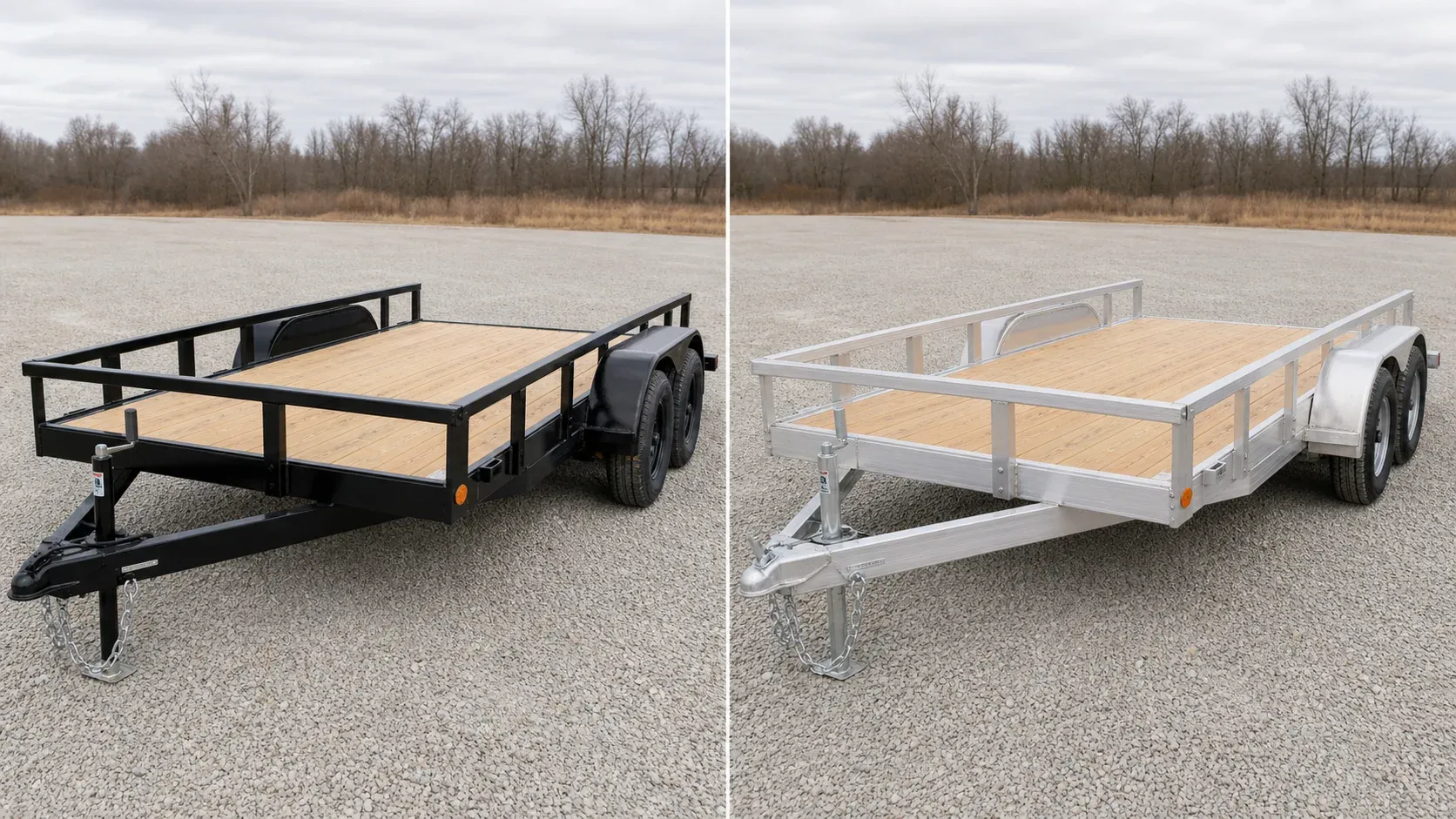
| Steel | Aluminum | |
|---|---|---|
| Price | The baseline | 30-to-50 percent premium |
| Empty weight | The baseline | Hundreds of pounds lighter |
| Corrosion | Paint and vigilance | Effectively immune |
| Repair | Any welding shop | Aluminum-capable shops only |
| Fatigue | Forgiving | Design-dependent, watch welds |
| Resale | Honest | Strong, especially coastal |
The material question runs through every category on this site. Two specific versions, car haulers and enclosed cargo, apply this framework to their own markets.
Strength per dollar
Steel gives you structure at a price. Its higher yield strength per dollar builds the I-beam frames the equipment world demands, it shrugs off a rough loading dock, and any welding shop in any town can fix it by Friday. The working categories run steel for a simple reason: the duty is abusive and the repairs are constant. That describes dumps, equipment haulers, and heavy flatbeds exactly.
The catch is rust. Paint, powder coat, and steady vigilance are the price of ownership, road salt and coastal air work every seam, and a neglected steel trailer ages fast. Budget for the frame inspections that every buying guide recommends.
Weight and forever
Aluminum's case is the weight it takes off the trailer. Hundreds of fewer empty pounds turn straight into payload or towing margin, and you can see that trade in the payload math. The corrosion story simply ends. Wash it and it outlives the loan, and resale stays strong because the next buyer knows both of those things. The utility, car-hauler, and powersports markets carry deep aluminum lines for exactly these buyers.
The downsides are the check you write and the welds you inspect. The premium is real at purchase. Aluminum also fatigues where a design concentrates stress, so give weld quality and gusseting a hard look during the walk-around. And repairs need a shop with aluminum capability, which is rarer and pricier than the steel counter down the road.
Duty and geography decide
Two questions settle most buyers. First, what's the duty? Heavy machine and material work argues for steel's structure and repairability, while lighter, vehicle-focused work opens the aluminum case. Second, where does it live? Coastal air and salted winter roads argue loudly for aluminum, while a dry inland garage keeps steel honest for decades. If your combination is payload-tight, run the tow-vehicle math and count aluminum's saved pounds as capacity you bought. If budget comes first, take steel's price and spend the difference on the axle and brake spec, which matters more than the metal anyway.
Steel vs. aluminum FAQ
How much lighter is aluminum really?
It depends on the category, but commonly 15 to 30 percent of empty weight, which is hundreds of pounds on working sizes. All of it converts to payload, and the subtraction shows how.
Is aluminum strong enough for equipment work?
It depends on the design, and the heavy equipment world stays steel for structure and repair reasons. Aluminum serves vehicle, utility, and cargo duty very well.
Does aluminum really not rust?
It doesn't rust. It oxidizes into its own protective layer. Watch the dissimilar-metal contact points, since steel fasteners on an aluminum frame need isolation. That's the one corrosion story aluminum keeps.
Why is resale stronger on aluminum?
The premium amortizes, the corrosion clock never started, and coastal buyers compete for it. Condition still rules, but the material starts ahead.
Which should a first trailer be?
Budget and duty answer it. Steel for working weight at a working price, aluminum where payload, salt, or decades of ownership headline the plan.