Best Trailers for Concession and Food Vending.

A food business runs on the concession trailer, a cargo shell built out with serving windows, power, water, and whatever equipment the menu demands. The buying decision comes down to a turnkey build versus converting a shell yourself. Health codes rule everything, and your county's requirements are the real spec sheet, so read them before you buy anything. Size the trailer to the menu, with a 7x16 as the working standard, and remember that every piece of equipment eats into your payload.
What a food trailer actually is
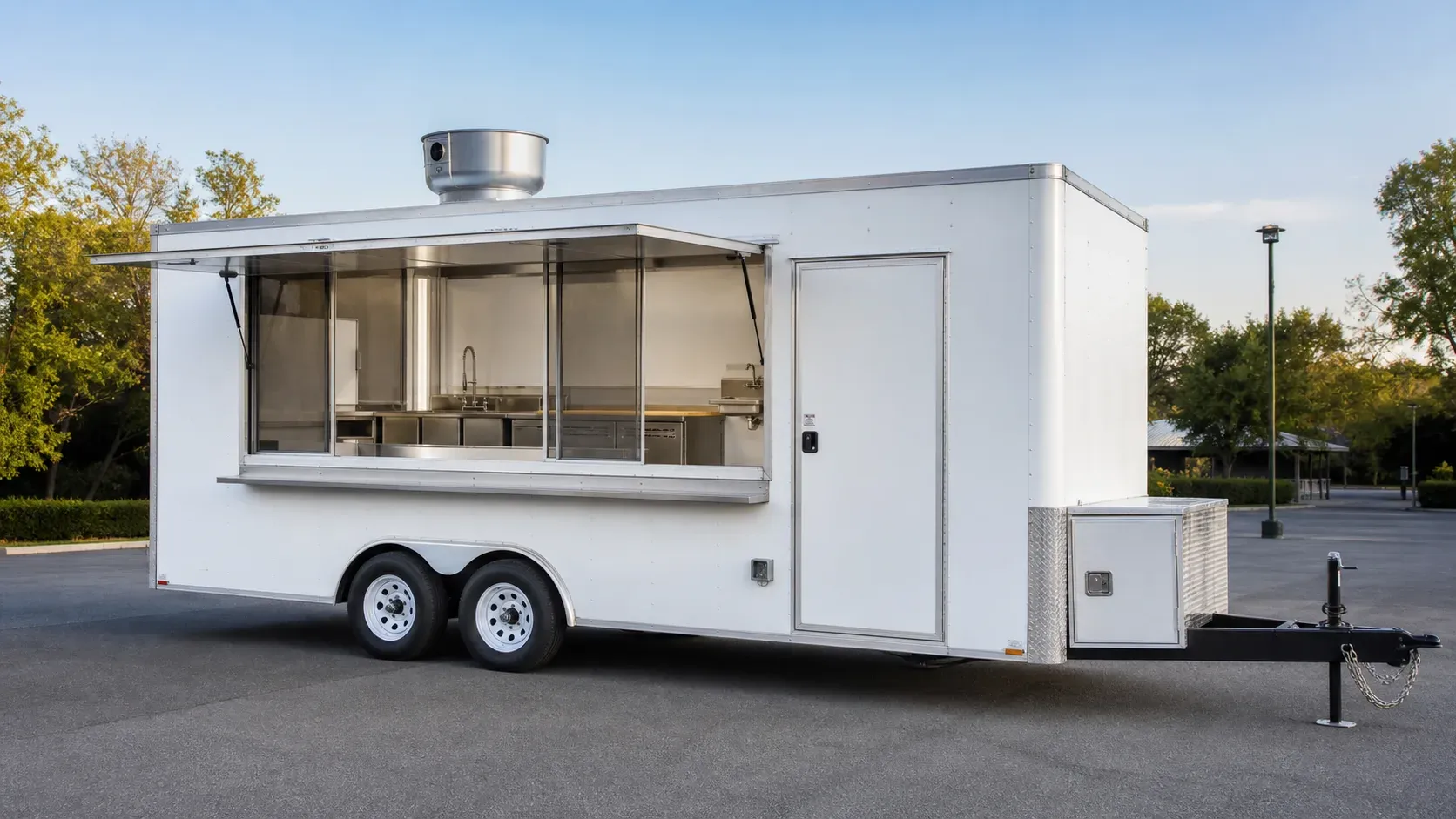
A concession trailer is a commercial kitchen built into a cargo trailer body. The concession page covers the trailer-side engineering in depth, so this page focuses on buying for the business. The anatomy is straightforward. You get serving windows with awning doors, an interior finished to food-code surfaces, and a power system, shore cord, generator, or both, feeding the equipment line. Water rides in three tanks, fresh, gray, and the hot-water heater codes demand, and anything that fries needs a hood-and-suppression system.
The health code is the real spec sheet. County and state requirements dictate sink counts, the three-compartment plus handwash standard, tank sizes, surface materials, hood specs, and inspection access. They vary a lot from one jurisdiction to the next, and a build that passed one county can fail the one next door. Read your operating county's mobile-food requirements before you put down a deposit. If you plan to run multi-county routes, read every county on the route, because the paperwork carries as much weight as the axles.
The weight math bites hard here. Equipment is dense. Fryers, griddles, refrigeration, and full water tanks stack thousands of pounds, and the payload math shows what that leaves you. A built-out 7x16 routinely grosses 7,000 to 9,000 pounds, which is why the 10K-and-up chassis classes earn their place under serious builds. Water alone runs 8.3 pounds a gallon, so a 40-gallon fresh tank adds 330 pounds every time you fill it at the commissary.
The buying fork, ranked
The turnkey path buys the build already done. Concession builders deliver code-ready trailers with the equipment installed, at prices that reflect a finished kitchen and timelines that reflect the industry's backlogs. It's the right answer when you have more capital than build time. Do your diligence on the builder's code record in your county, get references from operating customers, and check the chassis quality under the shine, because the same frame-and-axle standards apply under every fryer.
The conversion path starts with a cargo shell, a 7x16 tandem as the standard, with extra height for hood clearance and the concession package's window framing and reinforcement ordered at the factory. You or a local fabricator handle the build-out against the county's checklist. It trades money for time and control, and it suits the handy and the particular. The classic mistake is discovering a code requirement after the wall is already closed, which is exactly what working from the checklist first prevents.
Size follows the menu. A 6x12 serves coffee and cold menus, a 7x16 is the working standard for hot lines, and 8.5-wide builds make sense where the equipment line and the crew both need the aisle. The weights above put the tandem 7K-to-10K classes underneath them.
The vending life's craft
The daily rhythm is a kitchen that commutes. You secure the equipment for transport, latch everything, balance the tanks, and manage the fryer oil by its own hazardous set of rules. Mind the tongue weight as tanks fill and empty, and run the half-ton to three-quarter-ton math at built-out weights, not the shell's brochure number. The service day rides on site craft. Get the leveling jacks down before the fryer heats, place power cords and the generator by the venue's rules, and learn the awning's wind judgment once.
The compliance stack rides along with you. Health inspections land on the county's calendar, most codes require a commissary relationship, fire suppression gets serviced on its certificate schedule, and insurance has to cover a business that is a vehicle, a kitchen, and a workplace all at once. The mobile business page covers the broader trades-on-wheels patterns, and the food trailer is the most regulated one of the bunch.
Concession trailer FAQ
What size trailer for a food business?
The 7x16 is the hot-line standard, the 6x12 serves coffee and cold menus, and 8.5-wide builds handle big equipment lines. Let the menu set the floor plan, and the floor plan will set the length.
Buy turnkey or convert a shell?
It comes down to capital versus time. Turnkey delivers code-ready at full price, while conversion trades your own build hours for the savings. Either way, read the county checklist first, because both paths live or die on it.
What do health codes require?
It varies by county, covering sink counts, tank sizes, surfaces, hoods, and commissary ties, and it varies enough that one county's pass is another's fail. Your operating county's mobile-food code is the spec sheet.
How heavy do food trailers get?
Built-out 7x16s routinely gross 7,000 to 9,000 pounds, because equipment and water are both dense. The 10K-plus chassis classes earn their place under serious builds.
What truck tows a concession trailer?
Built-out weights push an honest half-ton at the light end and call for a three-quarter-ton on the working builds. Run the placard math to be sure.
Where does the trailer-side detail live?
The concession page covers the shell engineering, windows, power, water, and chassis standards, one click away.