Concession Trailers Explained.

A concession trailer is an enclosed cargo shell built out as a food business, with serving windows, commercial power, water systems, and equipment your county health department has opinions about. The shell is a third of the project or less. The buildout and compliance are the rest. Talk to your health department before your dealer, spec the shell around the code, and budget for the whole business, not just the trailer.
What a concession trailer actually is
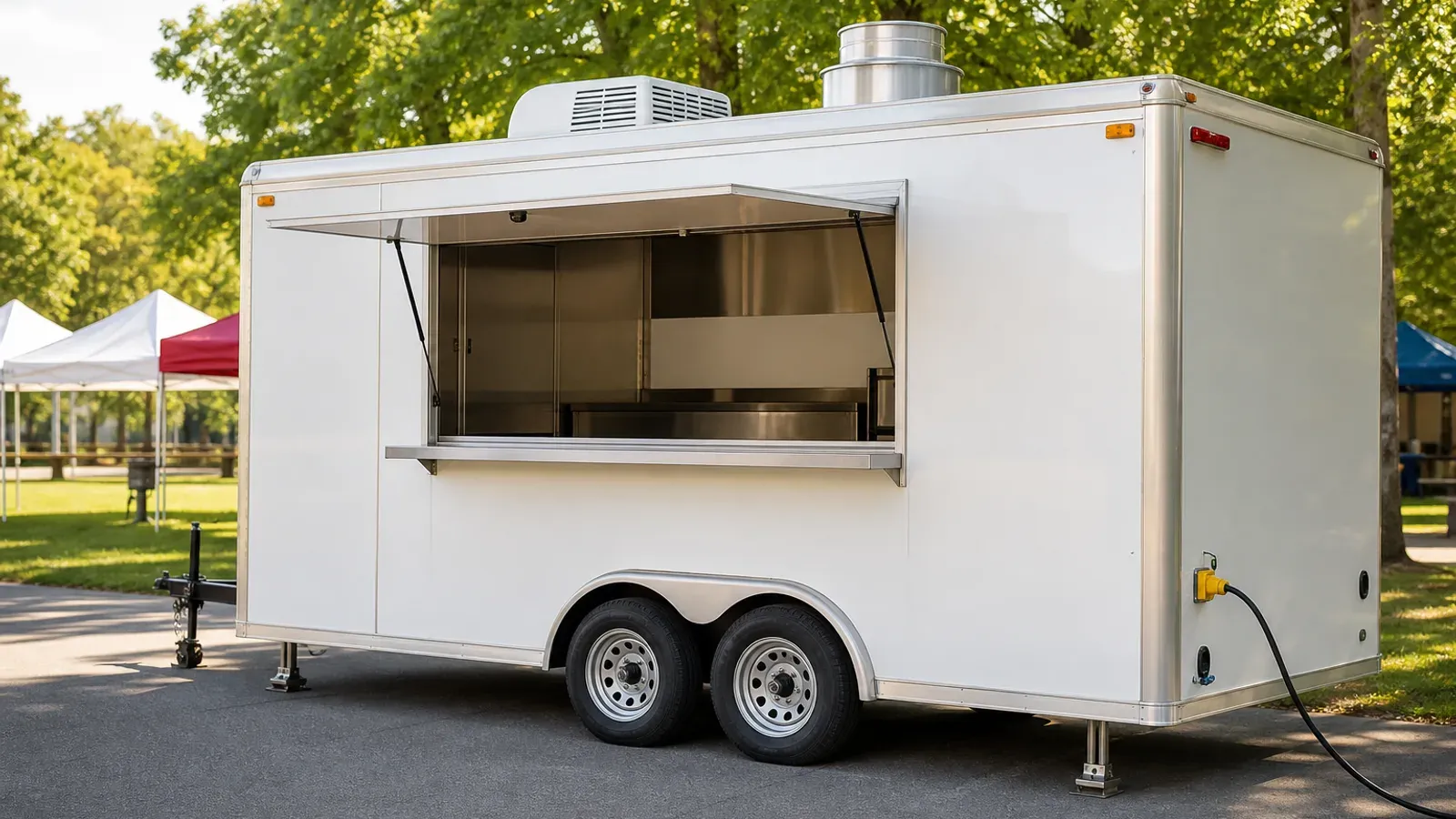
A concession trailer is where the enclosed cargo trailer stops being a hauler and becomes a commercial kitchen with a coupler. The shell carries serving windows, a generator or shore-power system, fresh and gray water tanks, ventilation over the cook line, and an interior finished to food-code standards. The finished unit is a business location that parks where the customers are.
The category spans a wide market. Factory-finished concession builds arrive turnkey from specialty manufacturers, priced like the businesses they are. Concession-ready shells split the difference, with windows framed, power roughed in, and walls finished washable, leaving the equipment buildout to the buyer. Bare cargo shells are the budget path, where the owner adds every system and the inspector finds every shortcut. This page covers the platform and the buying order, and the mobile business use case covers the wider business category.
If you remember one thing here, remember that the health department outranks the dealer. Food-service codes vary by county and state, and they dictate sink counts, water tank sizes, floor and wall materials, hood and suppression requirements, and window configurations before you've picked a color. Buyers who spec the trailer first and visit the inspector second fund the industry's rework economy. Reverse the order, get the requirements in writing, and hand them to whoever builds the shell.
Trailer versus truck is the category's standard fork. The food truck bundles kitchen and drivetrain into one vehicle, one engine to maintain, and one thing that strands the whole business when it breaks. The concession trailer separates the two. It's cheaper to buy, you can unhitch it at the pitch while the truck runs supplies, and any adequate truck can tow it when one breaks down. The tradeoff is the tow-and-park skill tax and the two-vehicle footprint. Most first-time operators, and most spreadsheets, land on the trailer.
Windows, power, water, and the code layer
The serving window is the storefront. Concession windows run 3 to 8 feet wide with flip-up awning glass and interior counters, positioned curbside for the service line. Frame them at the shell stage, because cutting windows into finished walls costs triple. A two-window layout, one for orders and one for pickup, keeps a rush organized, and the awning doubles as weather protection and shade for the line.
Power runs the menu. A coffee-and-cold-drinks build lives on 30-amp shore power or a small inverter generator, while a fryer-and-griddle line wants 50-amp service or a 7,000-plus-watt unit. Every serious build uses a proper panel, hardwired circuits, and exterior inlets instead of a tangle of extension cords. Generators mount on the tongue or in vented compartments, never sealed inside. Propane systems for cooking bring their own code chapter, with tanks outside in vented cages and lines hard-plumbed, leak-tested, and documented for the inspector who will ask.
Water is where codes get specific. You'll need fresh, gray, and hot water tanks sized to your county's rules, a three-compartment sink plus a handwash sink as the near-universal minimum, on-demand water heaters, and food-grade plumbing throughout. Ventilation scales with the cooking. A hood with fire suppression over any grease-producing line is standard in most jurisdictions, and it's the single most expensive surprise on the convert-it-yourself path. Floors, walls, and ceilings finish washable in commercial vinyl and FRP panel, which is why concession-ready shells skip the cargo world's bare plywood.
The weight math sneaks up on this category. Equipment, tanks full of water at 8.3 pounds a gallon, generators, propane, and stock all stack up fast. A modest cook line adds 2,500-plus pounds to the shell, and the 7,000-pound class suffocates under a serious build. The 8.5-wide shells at 9,900-plus GVWR are the working standard for full kitchens. Manage tongue weight with tank and equipment placement, water over the axles and heavy gear forward, and run the payload subtraction on the finished, stocked, watered trailer, not the empty shell.
Concession sizes by menu ambition
| Class | Typical GVWR | Menu Fit |
|---|---|---|
| 6x12 tandem | 7,000 lb | Coffee, shaved ice, cold service |
| 7x14 to 7x16 | 7,000 to 9,900 lb | Single-line hot food, starter kitchens |
| 8.5x18 to 8.5x22 | 9,900 to 14,000 lb | Full cook lines, the working standard |
| 8.5x24 and up | 14,000 lb | Multi-station kitchens, BBQ rigs |
Size follows the menu and the crew. A two-person line wants 14 to 18 feet of kitchen, with prep and service lanes that don't collide, and you should draw the equipment list to scale on paper before ordering any shell. It's the industry's cheapest design tool. Interior height runs 7 feet standard in the category, and both hood clearances and human sanity vote for it.
The tow math arrives loaded. A built 8.5x20 with water and stock grosses 9,000-plus pounds. That's three-quarter-ton work behind a wall of a trailer, and operators running daily routes should weigh the truck's honest ratings as the business expense they are.
Where the concession trailer wins and loses
Here's the buying rule, in order. Health department first, requirements in writing. Menu and equipment list second, drawn to scale. Shell third, sized and roughed in around both. Money spent in that order builds a business. Money spent in reverse builds a very shiny lesson.
Concession trailer FAQ
How big a concession trailer do I need?
Draw the equipment list to scale first. Cold-service concepts run in 12 to 14 feet, single hot lines in 14 to 16, and full kitchens want the 8.5-wide 18-to-22-foot shells that dominate the working market.
What comes first, the trailer or the permits?
The health department, always. County codes dictate sinks, tanks, hoods, and finishes before any shell spec makes sense. Get the requirements in writing, then go to the dealer.
Concession trailer or food truck?
The trailer costs less, separates kitchen from drivetrain, and stays open when the truck breaks. The truck wins on single-vehicle simplicity and tight urban pitches. Most first-time operators pencil out to the trailer.
How much does the buildout cost beyond the shell?
Typically two to three times the shell, covering equipment, power, water, ventilation, and compliance. Budget for the business, because the trailer is the cheap part.
What truck tows a concession trailer?
Built and stocked 8.5-wide units gross 9,000-plus pounds, which is honest three-quarter-ton work. The starter classes tow lighter, so weigh the finished trailer, not the brochure.
Can I convert a used cargo trailer myself?
We cover new only, and the code answer is the same either way, since the inspector doesn't grade effort. Concession-ready shells exist because factory rough-ins beat retrofits on both cost and compliance.