Pintle Hitches Explained.

The pintle hitch is a forged hook that captures a trailer's lunette ring, rated from 10,000 past 60,000 pounds. It tolerates terrain and abuse that destroy ball couplers, and it's loud about it, since the slop that absorbs shock also announces every start and stop. Commercial, municipal, and severe-duty fleets run it, and combination hook-and-ball hitches serve mixed yards. For pavement towing, keep the ball.
The ring and the hook
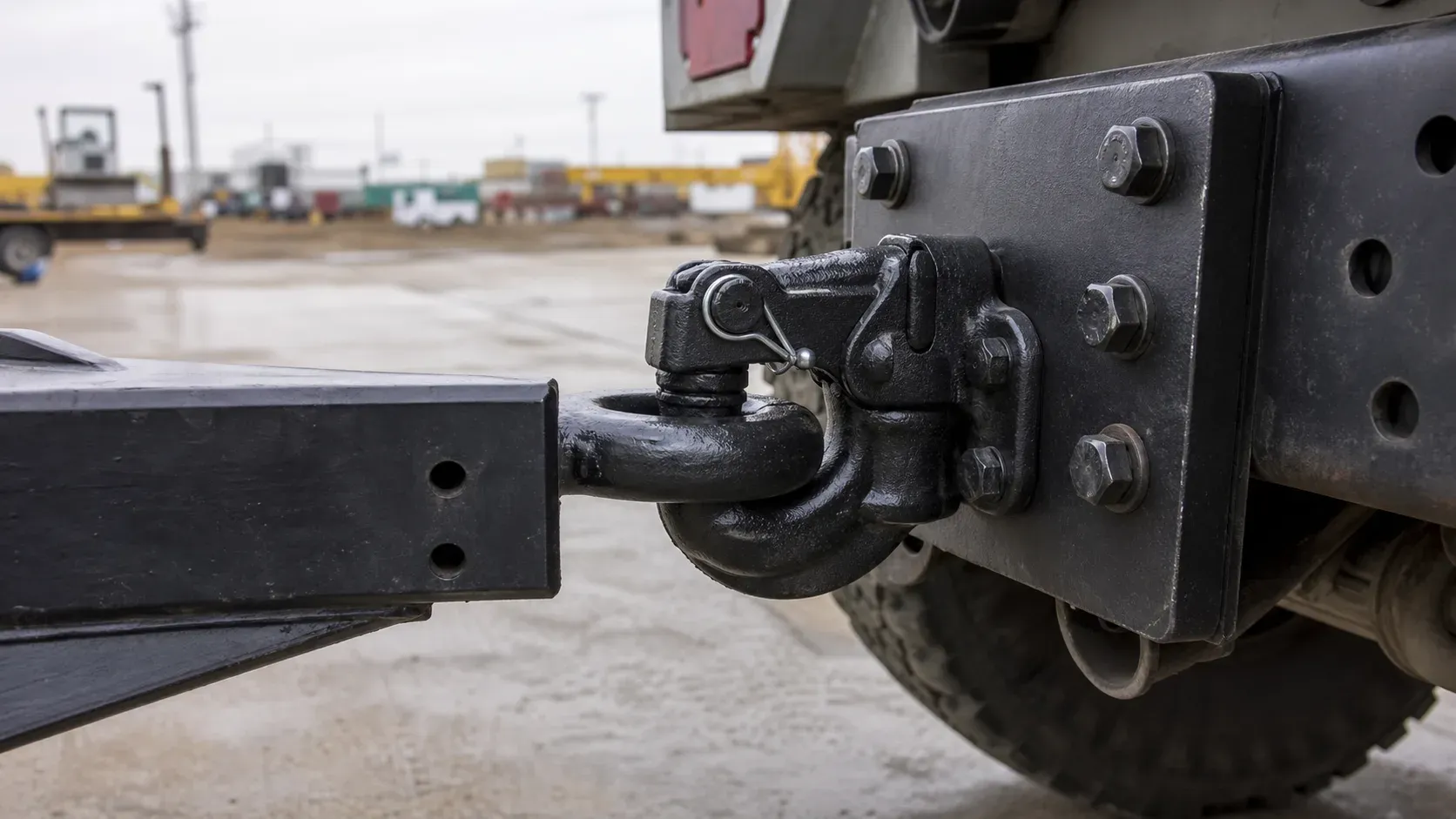
The pintle connection is towing's bluntest instrument. A lunette ring, a forged loop on the trailer's tongue, drops into a pintle hook whose latch closes over it. There's no machined fit and no precision, just deliberate slop where the ball world grinds toward zero clearance. The looseness is the point, since it absorbs the angles, shocks, and misalignment that rough ground delivers. That forged simplicity is also the rating, and hooks run 10,000 through 60,000-plus pounds because a solid steel hook has little mechanism to limit it. The whole pintle trailer world is built around it.
The hardware variations map to duty. Rigid hooks bolt to frames and plates at the commercial standard. Receiver-mount pintle plates bring the hook to any pickup, though at the receiver's rating, not the hook's. Combination hitches cast a ball into the hook's base and tow either family, the mixed fleet's answer. And air-cushioned hooks at the heavy tiers soften the slop's percussion for the trucks that live behind it. The pintle-versus-ball comparison referees the family choice, and this page covers the truck side.
Mounting, ratings, and the clunk
Mounting is the pintle's whole truck-side discipline. The hook's rating means nothing beyond what its mounting supports. Frame-attached plates are rated as systems on commercial trucks, receiver mounts are capped by the receiver's class, per the receiver page, and a bumper-drilled installation is the category's classic mistake, sheet metal asked to carry forged-steel loads. Read every rating in the chain before the ring drops. It's the site's lowest-number rule at the joint where the numbers run biggest.
Hookup is simpler than anything on the ball side. Ring into the open hook, latch closed, pin it, done. No height-matching, no marksmanship, which is one reason fleets love it. Ring and hook heights still want rough agreement for level towing, and adjustable-height channel mounts on commercial trucks answer the mixed-trailer yard. Chains, wiring, and breakaway close the ritual as always.
The clunk is the ownership fee. The slop announces every throttle and brake transition, which is tolerable behind a commercial cab but wearing on a pavement commute, and reduced-slop and cushioned hooks quiet what they can. The comparison's verdict stands: terrain and duty buy the ring, pavement keeps the ball's manners.
Pintle hitch FAQ
How much can a pintle hitch tow?
Hooks rate 10,000 through 60,000-plus pounds, capped as always by the mounting, the truck, and every rating in the chain. The heavy commercial tiers assume it.
Can I put a pintle hook on a pickup?
With a receiver-mount plate or bolt-on combination hitch, rated at the receiver and mount rather than the hook. Frame attachment only, never the bumper's sheet metal.
Why is pintle towing so loud?
The designed slop between ring and hook, the tolerance that absorbs off-road shock, announces itself at every transition on pavement. Cushioned hooks help, but the physics remain.
What's a combination hitch?
A pintle hook with a ball cast into its base, towing lunette rings and ball couplers alike, the mixed fleet's standard for one-truck-any-trailer yards.
Who actually needs a pintle?
Severe terrain, commercial tags past ball ratings, and fleets standardizing the connection, per the pintle trailer pages. Personal pavement towing rarely does.
Do lunette rings wear out?
They elongate and thin over their service life, inspected on the commercial calendar and replaced at the manufacturer's wear limits. Forged parts wear slowly and honestly.