Bumper-Pull Hitches Explained. Receivers, Balls, and Classes.

The bumper-pull hitch is a system: receiver on the frame, ball mount in the receiver, ball on the mount, coupler on the ball. It's only as strong as its weakest part. Class III and IV receivers with a 2-5/16 ball cover the working trailer world through 14,000 pounds. Match the ball to the coupler's stamp, set the ball height level, and check the pin, latch, chains, and wiring at every hookup.
Four parts, one rating
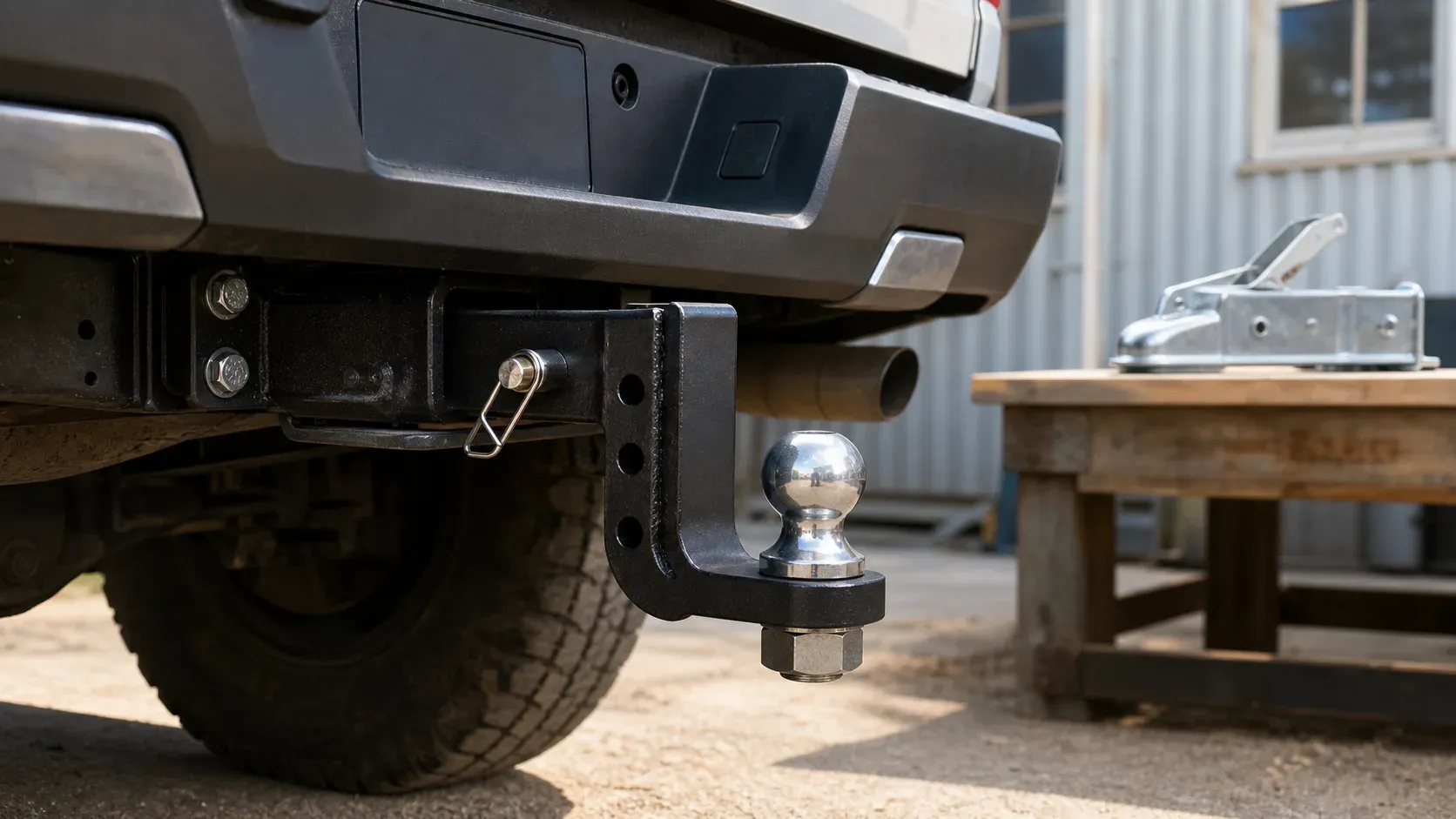
The receiver system stacks four rated parts. The receiver bolts to the truck's frame and presents the square tube, 1-1/4, 2, 2-1/2, or 3 inches by class. The ball mount slides in and pins, and its drop or rise sets the trailer's height. The ball threads on, sized 1-7/8, 2, or 2-5/16 inches to match the coupler exactly. And the trailer's coupler closes over the ball with a latch that either seats fully or isn't hooked up. The lowest rating anywhere in the stack governs, which is the hitches overview's rule at its most literal.
| Receiver Class | Tube | Typical Rating | The World It Serves |
|---|---|---|---|
| Class II | 1-1/4 in | 3,500 lb | Crossovers, light utility |
| Class III | 2 in | 5,000 to 8,000 lb | The half-ton standard |
| Class IV | 2 in | 10,000 to 12,000 lb | Heavy half-ton, HD trucks |
| Class V | 2-1/2 to 3 in | 16,000 to 20,000 lb | The receiver's ceiling |
Each class carries two numbers, a weight-carrying rating and a weight-distributing rating. The second is higher and only unlocks once you install a distribution hitch. Beside them sits the tongue-weight rating, the receiver's own share of the placard math.
Ball size, height, and the hookup ritual
Ball size is the one detail that can kill you. The coupler's stamp, 2 inches or 2-5/16 on working trailers, has to match the ball's stamp exactly. A 2-inch coupler won't close on a 2-5/16 ball, but a 2-5/16 coupler dropped over a 2-inch ball latches convincingly and comes off at the first pothole. Read both stamps at every unfamiliar hookup. Thirty seconds beats the worst afternoon towing can hand you.
Ball height sets the tow. The loaded trailer should ride level, so measure the coupler height against the truck's loaded receiver height and pick the mount's drop or rise from that. Level matters because a nose-high trailer unloads its front axle and sways, while a nose-low one overloads that axle and porpoises. One trailer takes one measured mount. Several trailers make an adjustable mount worth the price.
The hookup ritual closes every connection. Seat and latch the coupler, pin or lock it, and verify by lifting the tongue jack against it. Cross the chains under the coupler, rated for the trailer, with enough slack to turn and no more. Plug the wiring and walk the lights. Run the breakaway cable to the truck, never to the ball mount. And crank the jack all the way up, the one item on the list everyone skips exactly once.
Receiver hitch FAQ
What class hitch do I need?
Class III serves the half-ton's 7K world, Class IV the 10-to-12K tier, and Class V the receiver's 14-to-16K ceiling. The trailer's loaded weight plus margin picks the class, and the truck's ratings cap it.
What ball size do I need?
Whatever the coupler's stamp says, 2 inches on lighter trailers, 2-5/16 on the working classes. Match it exactly. The near-miss latch is the category's classic disaster.
Why does my trailer need to sit level?
Nose-high unloads the trailer's front axle and invites sway, nose-low overloads it and porpoises. Measure the ball mount's drop, don't guess it.
What are weight-carrying vs. weight-distributing ratings?
They're the same receiver's two numbers. The higher one unlocks when a distribution hitch spreads tongue weight across the axles. The sticker states both.
How tight should safety chains be?
Crossed under the coupler, with slack enough for full turns but short enough to catch the tongue before it hits pavement. Crossed is the law's word and physics' preference.
Can I tow with the ball mount upside down?
On most mounts, flipping a drop to a rise is designed use, confirmed by the mount's own markings. The ratings hold either way when the maker says so.