Big Tex vs. PJ Trailers. The Honest Comparison.

Big Tex and PJ are the broad-line heavyweights. Both are national, both cover dump through gooseneck, and both sit on nearly every trailer row in the country. Neither wins on the badge. The pick happens at the spec-sheet level, this model against that one, on frame, axles, honest payload, and the dealer's service bench. Compare two actual trailers instead of two reputations and you will buy right from either.
Big Tex vs. PJ at a glance
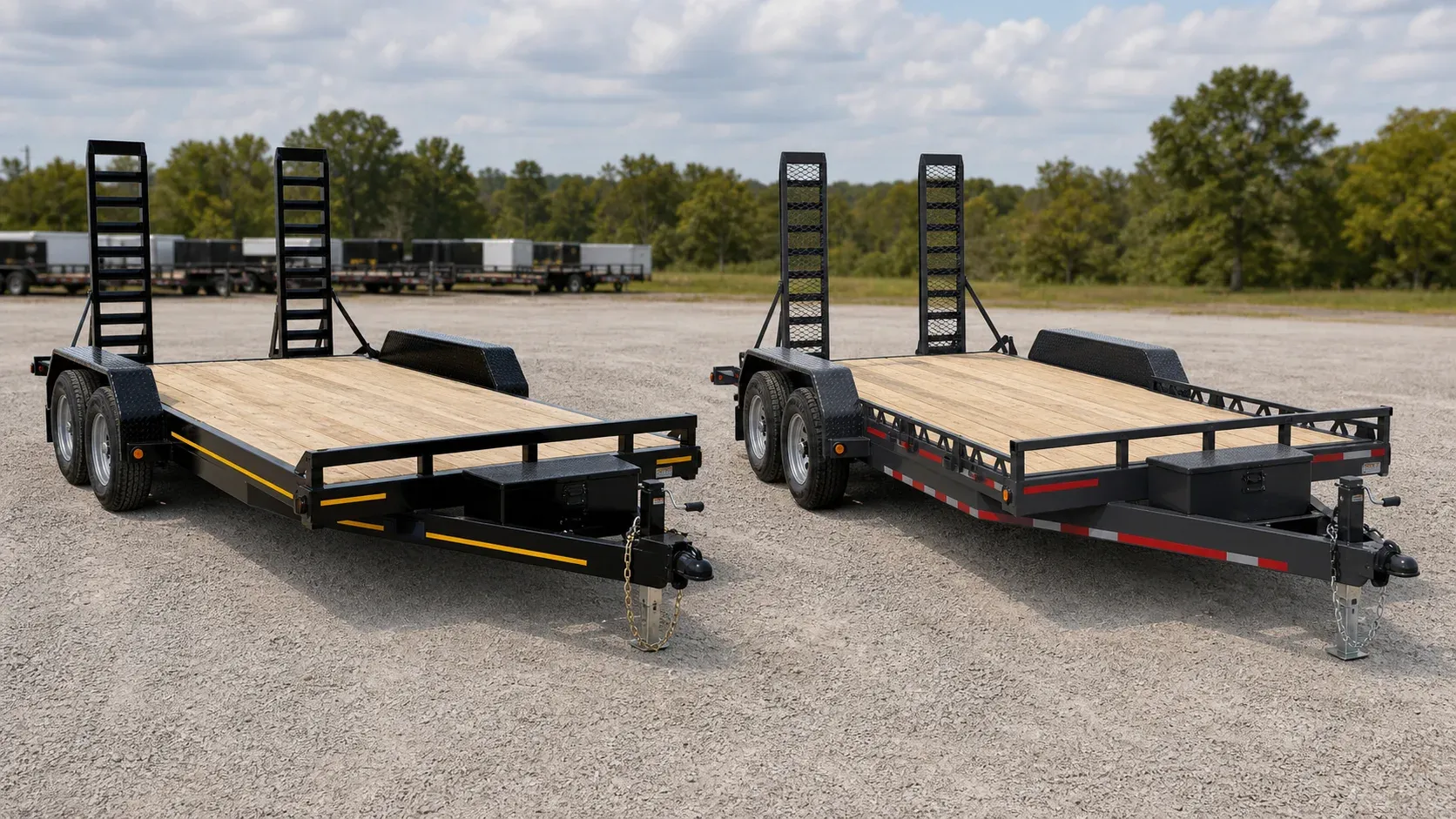
| Big Tex | PJ Trailers | |
|---|---|---|
| Lineup | Dump through gooseneck, full line | Dump through gooseneck, full line |
| Positioning | Mainstream, broad availability | Mainstream, broad availability |
| Network | National dealers | National dealers |
| Model naming | Capacity class plus series codes | Series letters by family |
| The tiebreaker | The local dealer's bench | The local dealer's bench |
The overlap is nearly total. Both build the working classes this site centers on, which is why this comparison resolves at the model level and not the brand level.
Breadth and the nearest dealer
Big Tex's case is presence. The line runs utility through heavy gooseneck, the dealer count keeps parts and service close in most markets, and the model codes, capacity class plus series as the brand guide explains, make cross-shopping easy once you learn them. If your tiebreaker is who can service the trailer on Tuesday, the nearest strong dealer often answers the whole question.
The same fight, fought well
PJ makes the same breadth argument, just model by model. Its lineup covers the identical categories, dump, equipment, tilt, deckover, and gooseneck, and the series structure keeps configurations orderly across weight classes. Where a given PJ model out-specs its Big Tex counterpart on frame, crossmembers, or standard features at a matching price, that model wins the comparison, and the reverse holds just as often.
Compare trailers, not badges
Put the two candidate models side by side and read five lines. Start with GVWR and the honest payload subtraction from real empty weights, then the frame and crossmember spec against the category's structural notes, the axle and brake brands, the written warranty and who covers frame versus components, and the dealer's reputation within towing distance. Those five answers pick the trailer. The name on the tongue turns out to matter least.
Big Tex vs. PJ FAQ
Which brand is better?
Neither, as a rule. Both build honest working trailers across the same classes, and the model-versus-model comparison decides each purchase.
Which has the better dealer network?
The one nearer you, honestly. Both run national networks, and the local bench that stocks parts and answers the phone is the network that actually matters.
Do they build the same classes?
Nearly identically, 7K through the gooseneck tiers, which is why the spec sheet settles what the badge cannot.
What should I compare first?
Real payload from a scale ticket or spec-sheet empty weight, then frame and axle spec, then the warranty in writing. The GVWR and rating notes explain how the numbers fit together.
Where do I research each line?
The Big Tex guide and PJ guide carry the lineups, model structures, and buying notes.