Trailer Weight Ratings Explained. GVWR, GAWR, GCWR, and More.

Five ratings govern every combination. GVWR caps the trailer's loaded weight, GAWR caps each axle's share, GTW is the trailer's actual weight against the hitch's rating, tongue weight is the hitch's downward share, and GCWR caps truck plus trailer combined. They bind independently, and the lowest number anywhere governs. This page puts the whole alphabet in one place.
Five ratings, one rule
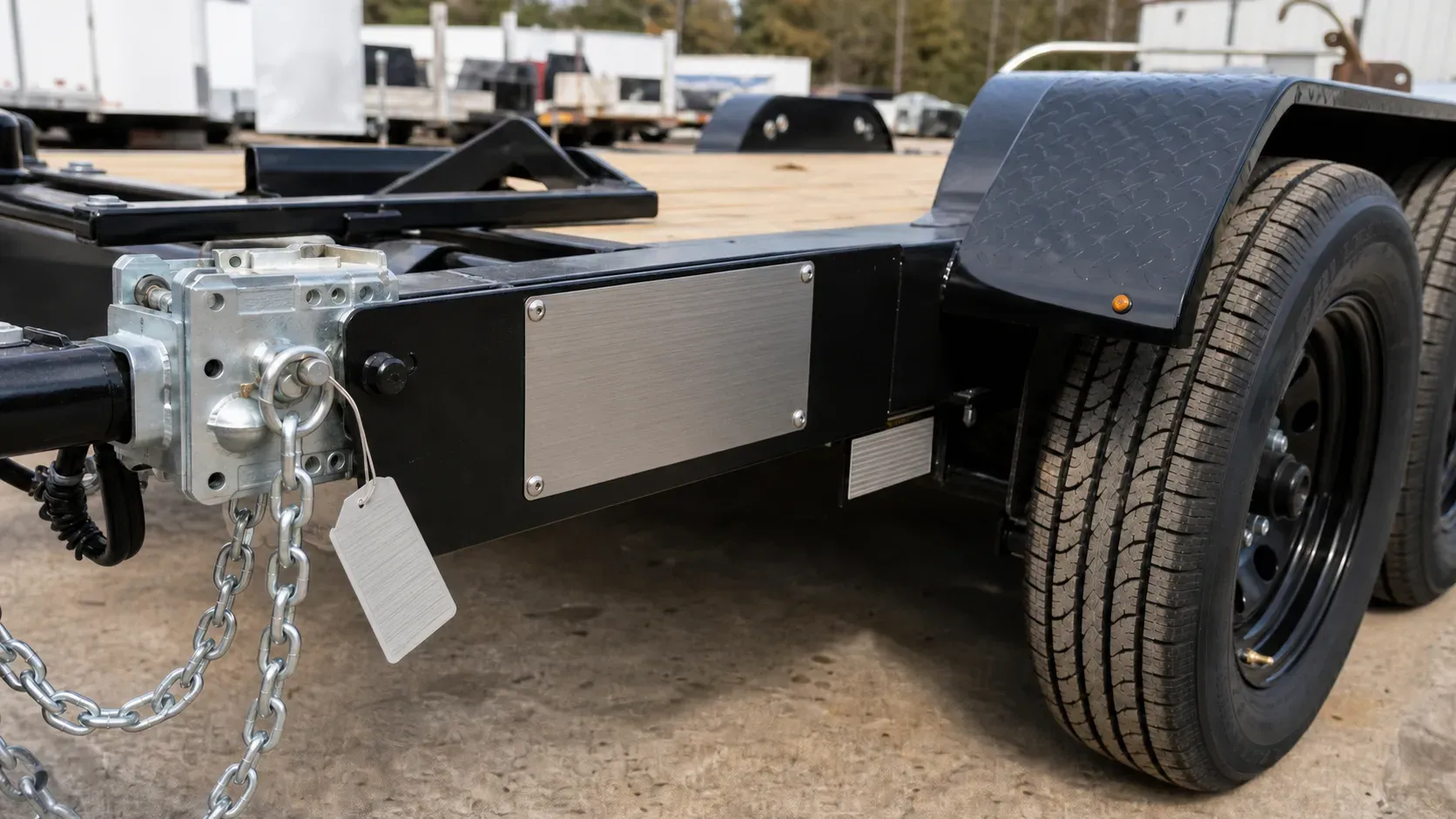
Each rating answers one question, and the lowest answer governs, the site's oldest rule stated as a table.
| Rating | What It Caps | Where It Lives |
|---|---|---|
| GVWR | The trailer's total loaded weight | Trailer VIN label |
| GAWR | Each axle's share of that weight | Trailer VIN label, per axle |
| GTW | Actual trailer weight vs. hitch rating | The scale, vs. hitch labels |
| Tongue weight | The hitch's downward share | The scale, vs. hitch and truck |
| GCWR | Truck plus trailer combined | Truck's manual, per configuration |
GVWR has its own page as the headline rating, and payload is its working subtraction. GAWR is the quiet one. Each axle is rated individually, so a tandem-7K trailer carries two 7,000-pound GAWRs, and a legal total can still overload one axle if the load stacks badly rearward or forward. That's the distribution check the scale's axle-by-axle ticket runs. GTW and tongue weight are the hitch's pair, actual weights measured against the hitch chain's ratings. And GCWR belongs to the truck, the combined ceiling its drivetrain and brakes are certified for, stated per configuration in the manual.
How the ratings stack on a real combination
Walk a real rig through the stack. A 14K equipment trailer loads a 9,000-pound machine. The trailer is 4,200 empty, so the loaded total is 13,200, inside GVWR. The machine parks at the deck mark, the axle scales read 5,900 and 5,700, inside both GAWRs, and 1,600 rides the tongue, inside the Class V receiver's distributing rating and inside the truck's payload placard after crew and tools. The truck at 8,400 loaded plus 13,200 makes 21,600 combined, inside GCWR and under the 26,001 CDL line, per the rules. Five checks, one pass, and the combination is legal at every link.
The failure patterns are the same walk with one number wrong. The legal total with a rearward stack that overloads the back GAWR. The light trailer whose tongue still exceeds the truck's placard because the truck was loaded first. The max-tow truck whose GCWR binds before its payload does. Each rating catches a different mistake, which is why they all exist and all bind independently, and why the scale's axle-by-axle ticket, a few dollars per visit, is the only instrument that reads the whole stack at once.
Weight ratings FAQ
What's the difference between GVWR and GAWR?
GVWR caps the trailer's loaded total, GAWR caps each axle's share of it. A legal total badly distributed can still fail an axle's number.
What's the difference between GVWR and GCWR?
GVWR rates one vehicle, GCWR rates the truck-plus-trailer combination, from the truck's manual per configuration. Both bind.
Which rating matters most?
Whichever is lowest on your combination, that's the rule. In practice, the truck's payload placard and the trailer's GVWR bind most often.
How do I check GAWR compliance?
A truck scale's axle-by-axle ticket, trailer axles weighed separately, against the label's per-axle numbers. Load position moves the split.
Do the ratings add up neatly?
No. The GAWRs often sum above GVWR, and GCWR sits below the GVWRs' sum, since each rating is derived independently. They bind independently too, so check each one.
Where does the 26,001-pound CDL line fit?
It reads the truck's and trailer's GVWRs stacked, for commercial use, per the rules. It's a ratings question, not a scale question, which surprises people.