The 3,500-Pound Trailer Class Explained.

The 3,500-pound class is the single-axle tier, one 3,500-pound axle under utility, small cargo, and toy trailers, carrying an honest 2,000 to 2,900 pounds. Nearly anything with a hitch can tow it, it often runs brakeless under state thresholds, and it ends exactly where its numbers say, at the first yard of wet soil or the second big machine. It's the honest entry class, and it rewards being bought honestly.
One axle, honest numbers
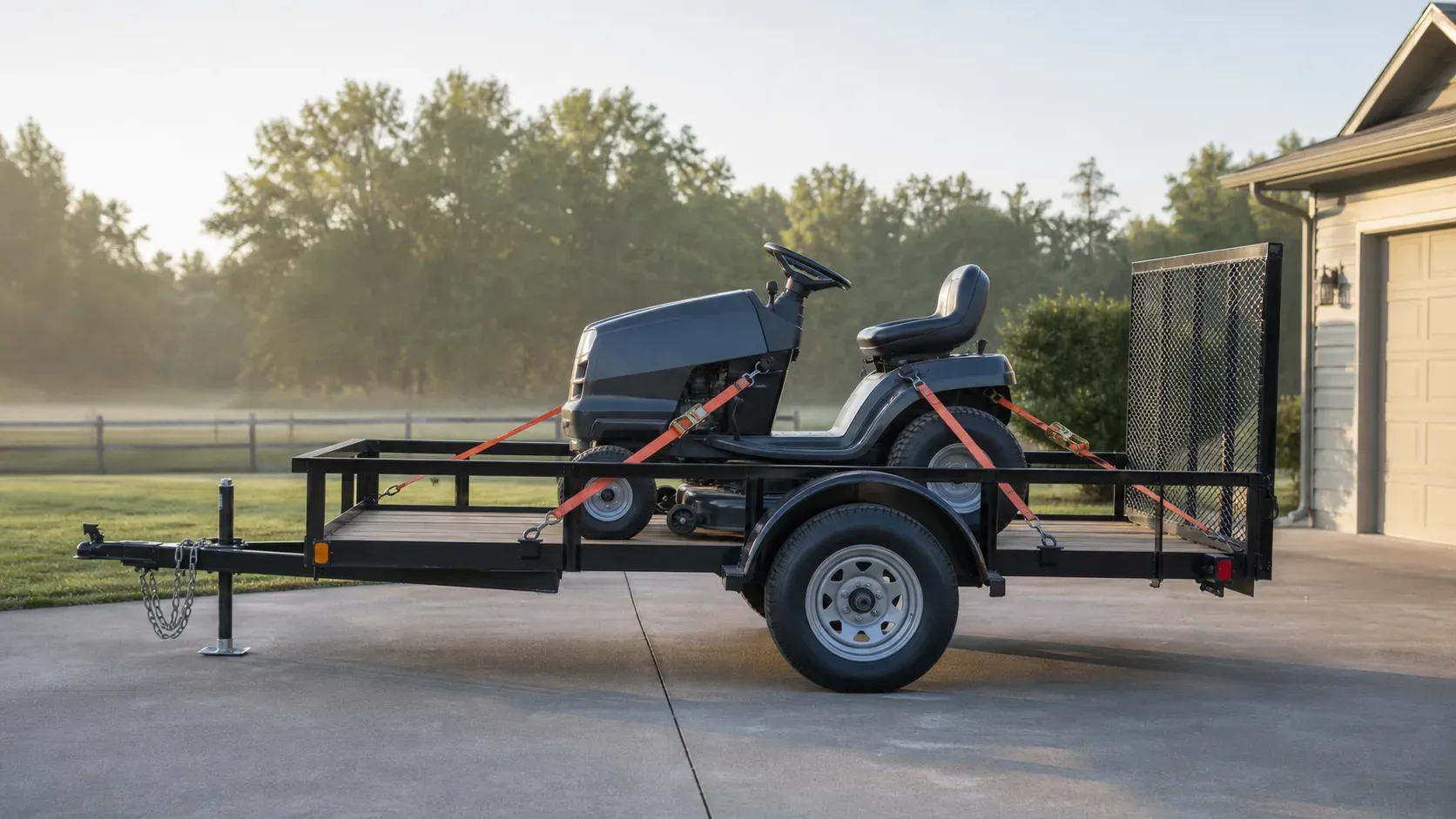
The class is defined by its hardware. A single 3,500-pound axle sets the GVWR at or under its own rating, and the market is towing's front door: single-axle utility trailers, 5x8-through-6x12 cargo boxes, motorcycle and powersports rigs, and the light-duty world every mid-size truck and SUV partners with happily.
The payload subtraction runs tight at this scale. Empty weights of 600 to 1,500 pounds against the 2,990-or-3,500 badge leave 2,000 to 2,900 usable, and the class's classic mistake is density. The soil and gravel math buries one axle at half a yard while the deck still looks empty. Volume cargo, furniture, brush, and toys, is the class's honest life.
Brakes split the class by state. Most thresholds land at 3,000 pounds GVWR, some at 1,500, per the rules. That's why 2,990-badged trailers exist, and it's why the brake option is worth taking anyway on anything towed by a lighter vehicle.
The class at a glance
| Spec | Typical Range |
|---|---|
| GVWR | 2,990 to 3,500 lb |
| Empty weight | 600 to 1,500 lb |
| Honest payload | 2,000 to 2,900 lb |
| Axle | Single 3,500-lb, idler or braked |
| Tires | 13 to 15 in, load range C/D |
| Tow vehicle | Mid-size, SUV, anything rated |
The ownership costs are the market's lowest, two tires, two bearings, no brake service on idler builds, and single-axle maneuverability that hand-moves in the driveway. Those are the virtues the single-versus-tandem page weighs against the redundancy the class lacks. A blowout at this tier is an event, not an inconvenience, so the spare and a bearing kit ride along accordingly.
3,500-pound class FAQ
What can a 3,500-pound trailer carry?
An honest 2,000 to 2,900 pounds, furniture, toys, brush, and light material. Dense loads like soil hit the limit at half a yard, which is the class's classic trap.
Does it need brakes?
Most states require them above 3,000 pounds GVWR, some at 1,500, which is why 2,990 badges exist. Behind a light tow vehicle, take the brake option regardless.
What can tow it?
Nearly anything with a rated hitch, mid-size trucks and SUVs comfortably, though the payload math still governs loaded combinations.
2,990 or 3,500 GVWR, what's the difference?
The badge is set against your state's brake and registration thresholds. The hardware underneath is the same. Federal and state rules draw those lines.
When do I need the next class up?
When honest loads pass 2,500 pounds regularly, or when density enters the picture. The 7,000-pound tandem class is the standard step.