Big Tex vs. Load Trail. The Honest Comparison.

Big Tex and Load Trail both build the full working line, dump through gooseneck, at mainstream prices with national reach. They differ more in emphasis than in what categories they cover, so your real work is the same as it is for any brand matchup. Put two actual models side by side, figure payload from honest empty weights, read the frame and axle spec, get the warranty in writing, and check the dealer bench that will actually service the trailer.
Big Tex vs. Load Trail at a glance
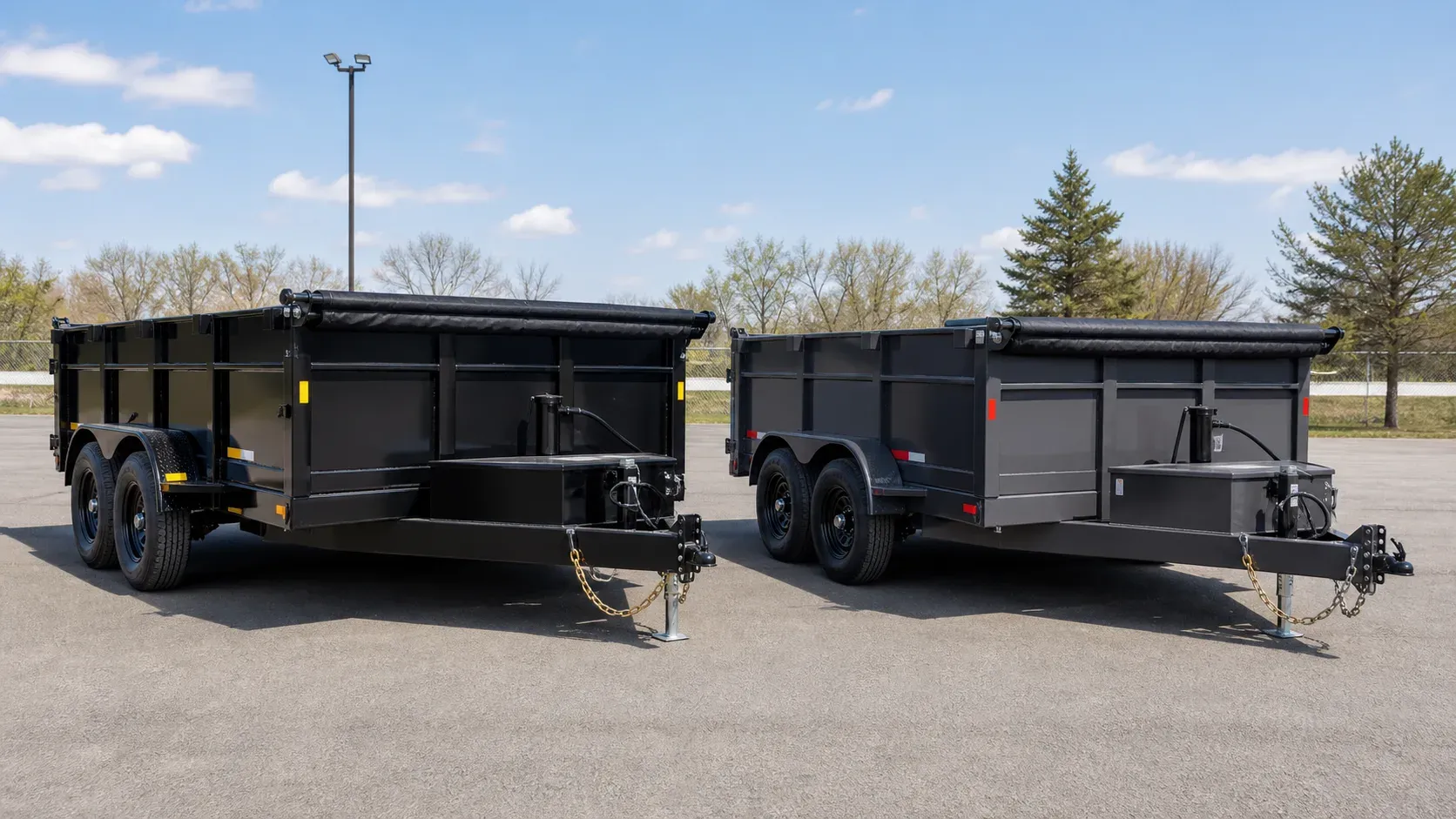
| Big Tex | Load Trail | |
|---|---|---|
| Lineup | Full working line | Full working line |
| Positioning | Mainstream, broad availability | Mainstream, working emphasis |
| Home classes | Utility through gooseneck | Dump through gooseneck |
| Network | National dealers | National dealers |
| The tiebreaker | Model spec plus local bench | Model spec plus local bench |
Both brands live where this site's working classes live, and their dump and gooseneck lines meet head-on in the categories buyers cross-shop hardest.
The broad-line standard
Big Tex's case runs on breadth and presence. The full catalog covers everything from homeowner utility to commercial gooseneck, the dealer network is dense enough to keep service close, and the model codes are readable once you know the system the brand guide lays out. Step across categories over the years and you can stay inside one brand, one dealer, and one parts pattern. That quiet convenience is what broad lines sell.
The working-trailer focus
Load Trail puts the working end first. Its line concentrates on the categories that earn their keep, dumps, equipment, tilt, deckover, and gooseneck. When a given Load Trail model carries heavier standard spec on the frame, jack, or feature set at a matching price, that model takes the comparison. Reading feature for feature pays off here, because standard equipment shifts by model year and the differences add up to real dollars.
The five-line method
Work five lines and let them settle it. Start with honest payload from a real empty weight, then the frame and crossmember spec against the category standard, the axle, brake, and tire brands, the written warranty and its split between frame and components, and last the local dealer's service reality. When the two models tie on all five, buy the nearer bench. When they do not, the spec sheet has already made the call.
Big Tex vs. Load Trail FAQ
Which builds the better dump trailer?
The model comparison decides, since both brands treat dumps as core products. Compare cylinder spec, box gauge, axle brand, and honest payload, and the dump buying guide walks through each.
Are the warranties similar?
Terms differ by component and change year to year. Get both in writing and compare frame coverage specifically, which is the advice every brand guide here repeats.
Which holds resale better?
In the mainstream tier, condition and class outrank the brand. Both move well maintained, and neither carries a premium the other cannot match.
Do both build heavy goosenecks?
Yes. Both run the gooseneck tiers this site's heavy pages cover, and the pin-weight and truck math works out the same for either.
Where do I research each?
The Big Tex guide and Load Trail guide, along with each brand's dedicated dump pages.